
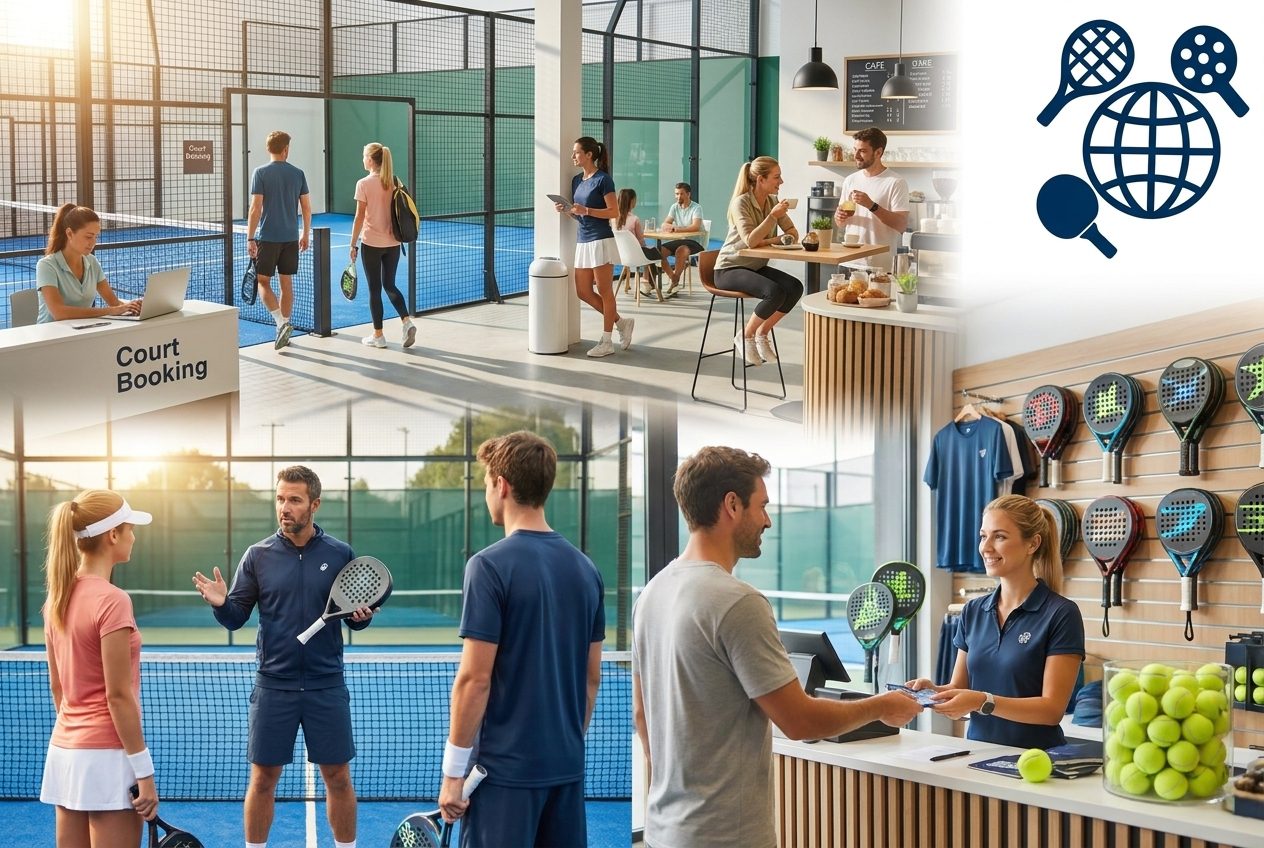
The UK leisure and sports hospitality sector received a massive jolt to its revenue playbook ahead of the upcoming summer season. Recent industry blueprints report that installing and optimizing a single Padel court can generate upwards of £10,000 per month for savvy venue operators.
For facility managers watching their overhead costs climb faster than a rookie’s heart rate in the playoffs, this isn’t just a feel-good story about a growing sport. It is a fundamental shift in how physical space is monetized. Padel has evolved from a niche European import into a reliable financial engine, offering a low-barrier, high-engagement activity. It keeps players coming back to the facility day after day.
The secret to surviving and thriving in this new era lies in diversification. Simply throwing up some glass walls and charging an hourly rate is no longer enough to maximize the sport’s potential. Facility owners who treat their courts like a multi-layered franchise are the ones hoisting the championship trophy at the end of the fiscal year.
If you want to boost your monthly profit margins, you have to execute on all fronts. Here is the ultimate scouting report on the top 10 ways to streamline and supercharge your Padel operations.
1. Court Bookings: Your Franchise Player
Just like a superstar point guard, your court bookings run the offense. Most UK venues are currently charging between £10 and £20 per player per hour for court time. Since you need four players to field a game, a single hour slots in at £40-£80 in top-line revenue.
Even with a conservative usage rate of four to six hours a day, a facility can pull in anywhere from £3,000 to £6,000 a month. Busy venues are routinely clearing that £10,000 mark. The beauty here is the speed of the return. When managed correctly, venues cover their initial monthly court hire costs in the first two to three weeks of operation. After that, you are just running up the score in pure profit.
2. Racket Hire and Ball Sales: The Easy Layups
You don’t leave points at the free-throw line, and you shouldn’t leave money on the table when players forget their gear. Padel equipment is relatively simple and incredibly inexpensive to stock, making it the perfect add-on revenue stream. Hiring out a racket typically costs the player £3 to £5 per session.
If you own a racket that costs you £30 wholesale, you pay it off in just a few days of rentals. Multiply that by four players, several times a day, and you are looking at an extra £1,000 to £2,400 a month. Add in the constant churn of players buying fresh cans of balls, and your baseline revenue gets a very comfortable cushion. They are usually sold for £5 to £8 at a healthy markup.
3. Retail and Pro Shops: The Merch Game
Once players get hooked on the sport, they want to look the part and play with their own hardware. You don’t need a sprawling retail megastore to make this work. A tightly curated display stand next to the check-in desk works wonders.
The profit margins on equipment retail are undeniable. A mid-range racket bought wholesale for £40 can easily retail for £90 or more. Premium rackets push those margins even higher. Players love the tactile experience of holding a racket before they buy. Capitalizing on that impulse right after they come off a thrilling match is a veteran business move.
4. Coaching and Clinics: The Development League
Every great team needs a solid farm system to develop new talent. For your business, that means investing in coaching and beginner clinics. Coaching services allow you to offer premium-priced experiences without adding a single square foot of infrastructure.
Whether you are running one-on-one sessions for £50 an hour, group beginner clinics for £15 a head, or after-school kids’ programs, coaching builds long-term loyalty. When a beginner learns to play at your facility, they are likely to make it their permanent home court.
5. Tiered Membership
Choosing an hourly payment plan can make your revenue stream inconsistent. The best thing is to create membership plans for your incoming customers. By offering packages that include priority booking, discounted court fees, or members-only socials, you secure a reliable monthly revenue stream.
Even capturing 50 players at a modest £15 a month adds an estimated £750 to your wallet before a single ball is served. It builds a walled garden that keeps your core players loyal to your venue rather than shopping around for cheaper public courts.
6. Food and Beverage: The Concession Stand
Nobody likes to play a grueling three-set match and then immediately jump into their car. Padel is an inherently social sport, and players actively want to hang around and talk trash after the final point. Adding a small cafe, a juice bar, or even a high-end vending machine captures that post-game lingering. Selling protein shakes, coffees, energy bars, and hydration drinks can easily add an extra £500-£800 a week. You transform your venue from a simple sports facility into a localized social hub.
7. Tournaments and Corporate Events: The Primetime Matchups
If you want to generate a massive spike in weekend revenue, you have to host the big game. Padel is uniquely suited for team-building events, local tournaments, and charity fundraisers. These events are cash magnets.
You collect entry fees, you sell out your food and beverage inventory, and you rent out every piece of equipment you own. A well-organized Saturday tournament can easily generate over £1,000 in a single afternoon, all while introducing dozens of new players to your facility for the very first time.
8. Off-Peak Subscriptions: Clock Management
Every facility manager hates looking out at an empty court on a Tuesday at 11:00 AM. Dead time is the enemy of profitability. Smart operators are fighting this by offering off-peak subscriptions. By selling discounted monthly passes that allow access during low-demand hours, you attract price-sensitive demographics such as students and shift workers. You are converting dead air into a reliable, secondary revenue stream.
9. Sponsorship and Advertising
Your court is a captive environment with a highly desirable demographic locked inside a glass box for 60 minutes at a time. Local businesses will pay good money to get their brand in front of that audience. You can sell banner space, court naming rights, or logo placements on the back walls and nets.
Securing local partnerships can easily bring in £200- £1,000 a month of completely passive income. It scales perfectly with your community’s size. The more players you have, the more you can charge for the real estate.
10. Community Use and Facility Rentals: The Utility Player
Sometimes the best way to make money is to let someone else run the floor. During your historically quiet hours, you can rent the space wholesale to local schools for PE sessions, fitness trainers seeking outdoor space, or corporate wellness programs. Building these community partnerships not only fills your unused time slots but also cements your facility as an indispensable pillar of the local neighborhood.
Conclusion
As padel continues its rapid rise, the real winners will be facility owners who treat it as more than just a court rental business. The key lies in stacking multiple revenue streams—from bookings and coaching to events, retail, and sponsorships—to create a consistent and scalable income model. By maximizing every square foot of your space and every hour of your schedule, you turn a simple sports facility into a high-performing business engine.
At Racketivity, we are all about helping players and facility owners stay ahead of the game. And if you are looking to upgrade your performance or stock your venue with quality products, be sure to visit our shop to buy the best padel gear available.