
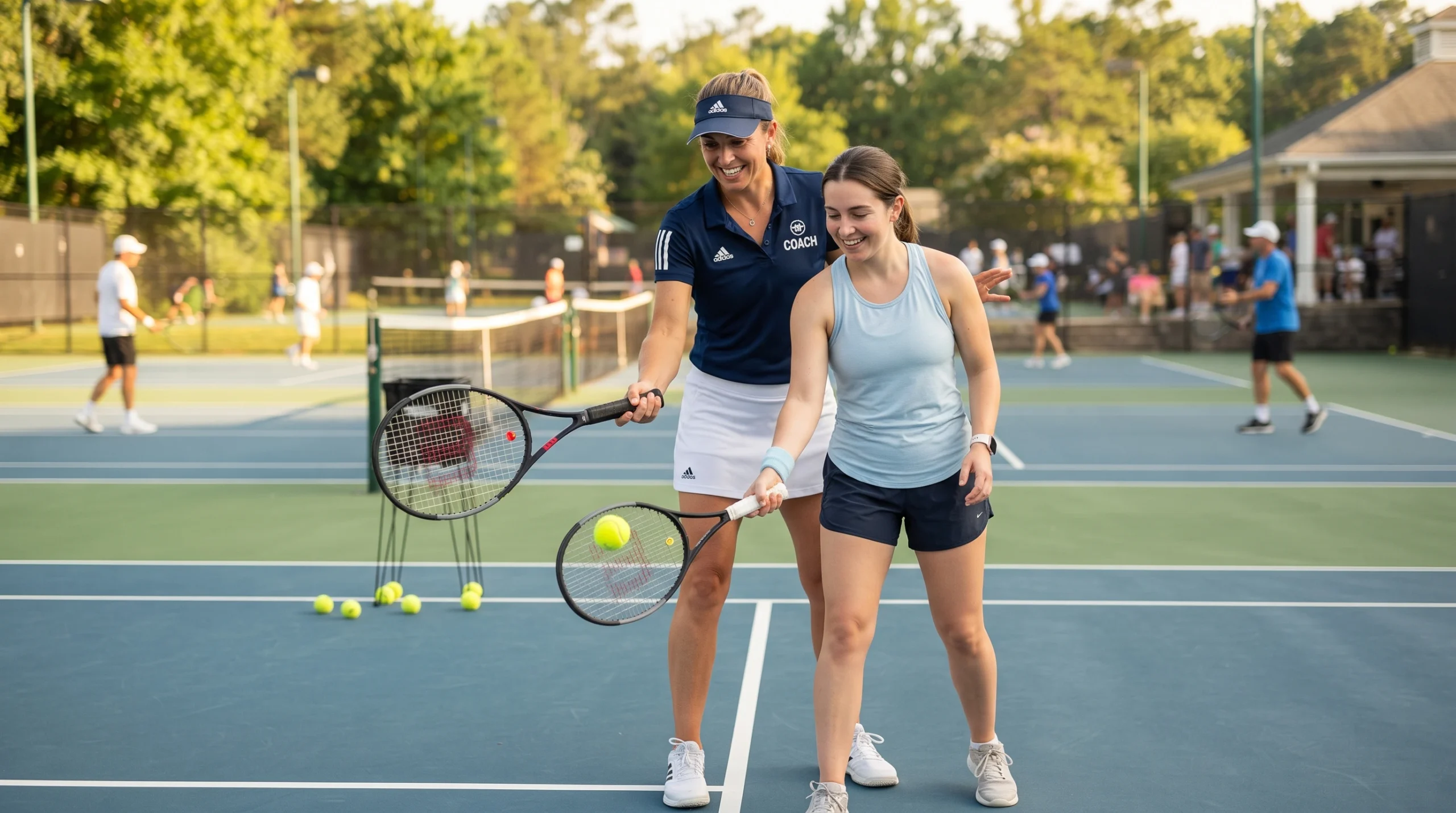
Being a tennis coach is extremely demanding, especially when you are coaching beginners. If you are working with established players, you know that you aren’t going to do much in terms of their base level. It is just about making slight adjustments to improve their game.
However, to build a base level with a beginner is a totally different ball game. Given that tennis is less beginner-friendly than padel and pickleball, the coaches have an even bigger job to do now than ever. However, today’s coaches are making one major blunder: not only eroding tennis at the club level, but also helping padel and pickleball win as a result.
Beginning With The Serve
In tennis, a serve is the most difficult shot. It is also the most unique one because it is the only shot we all control. The other shots (return, slice, top spin, lob), we all react to. However, in terms of difficulty level, there is no shot that is more difficult than a serve.
In today’s day and age, especially in countries that do not have a federation that produces a pool of new players, the coaches are making a major mistake. They ask the beginners to start off their tennis journey with the serve. And that is suicidal for any person who aspires to be a tennis player. That is like asking a pre-nursery student to clear a 3rd standard exam.
High-Profile Examples
Serve is the shot that is the most difficult to improve. There are so many professional-level players who are still struggling with it. You can just look at the WTA Tour, which is filled with serving issues. Coco Gauff is a two-time Grand Slam champion, but her serving issues are well-documented. That shot has led her to change coaches over the past few years.
Maria Sharapova was extremely tall, and having a height normally encourages servers. However, she had a serving issue throughout her career, which cost her many important matches, notably against Serena Williams.
Novak Djokovic, widely considered the greatest tennis player of all time, had to adjust his coaching staff due to his serving lapses. He hired Goran Ivanisevic in 2018, who made him one of the most reliable servers in the game.
Rafael Nadal, another tennis legend, had his troubles with serve throughout his career. Many considered it his weakness as they studied ways to beat him. So if elite players are struggling to improve their serve, what do you think a beginner-level player would do? What makes the coaches think that the athletes who have never picked up a tennis racket before will automatically start hitting first serves on Day 1?
This point is extremely critical for not just the developing countries. It is because they are already deprived of a federation that produces a pool of players. And if there are coaches who bring this sort of coaching strategy, the pool of players is effectively zero then.
Impact of this Coaching Philosophy
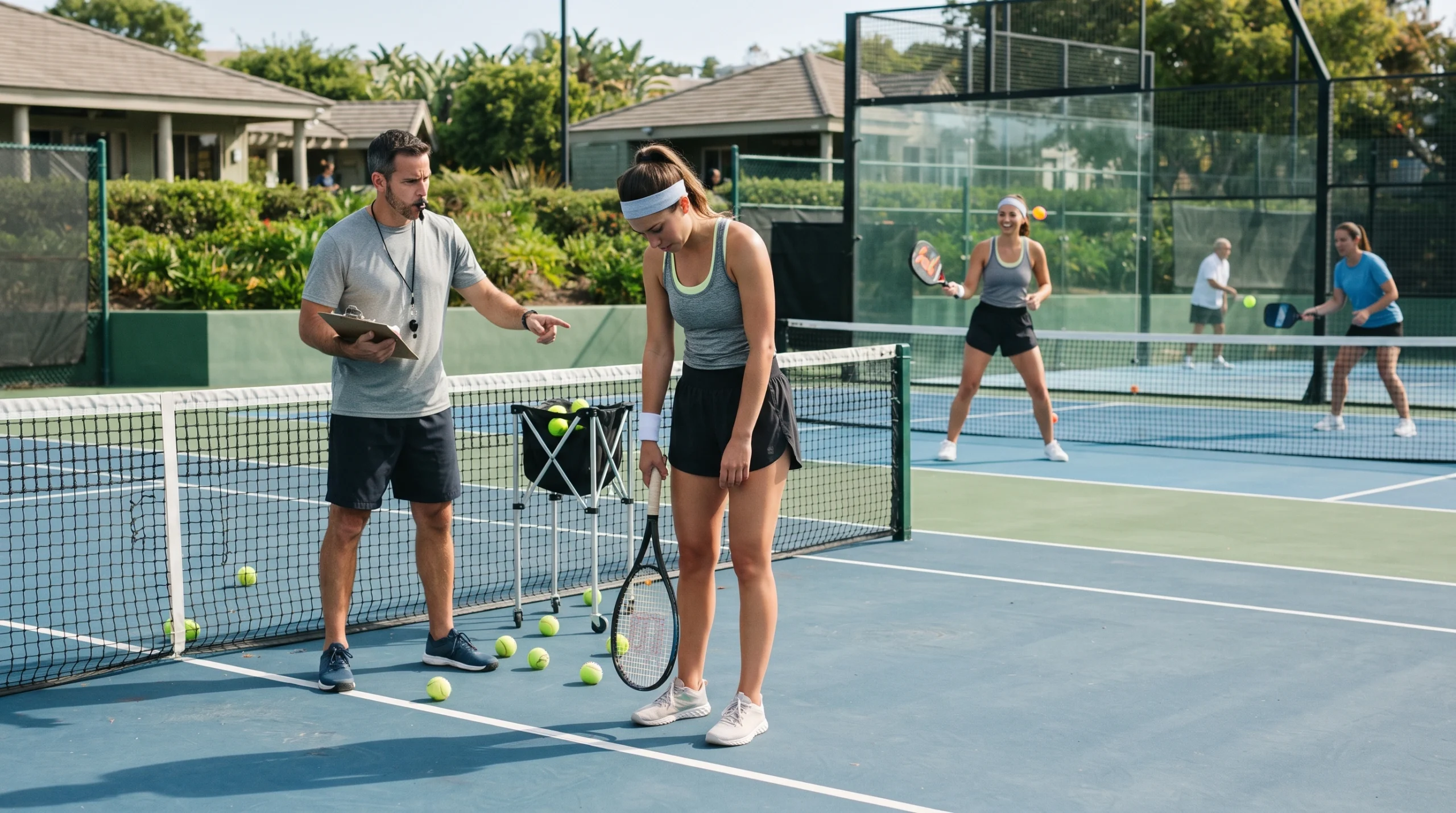
Such coaching strategies not only demotivate a new tennis player but also, with the emergence of padel, bring another problem to the tennis world. When a beginner believes tennis is extremely difficult, they may start looking at other sports.
Considering the emergence of padel and pickleball, they will look into it. Considering the backlash they have received on their serves in tennis, they will realize that the serves in padel and pickleball are far more beginner-friendly.
For context, a tennis serve is an overhead serve, but a pickleball and padel serve is an underarm serve. Considering this easy nature, they will opt to go to the padel and pickleball world instead and try their luck there. As developing countries build more and more padel courts today, they will have a larger community to interact with.
Hence, you can see that a poor tennis coaching strategy not only diminishes tennis but also undermines padel and pickleball. It is important that the coaches make tennis as beginner-friendly as possible to keep the beginners motivated.
How to Make Tennis Beginner-Friendly?
If a beginner is there, you should not assume that he’s going to hit serves or hit winners from the baseline on Day One. Hence, you need to give them the confidence of clearing the net first. This can be done by making the court as small as possible. The coaches can use the service box as their baseline.
Once those beginners start clearing the net from the service box, the coach can move back slowly. And then there will come a point when the coach reaches the actual baseline. Then, it is all about building the rally game.
The coaches should not smack shots at the beginners. However, they should allow them to dictate play and become defenders themselves. Beginners may hit unforced errors, but that is part of their learning curve, as they often want to start their tennis journey by playing attacking tennis.
Once they finish their attacking tennis, you can start improving their defensive game by reversing roles. You can also change the court surfaces to ensure they become familiar with grass, hard, and clay simultaneously.
Once the attack and the defensive game are completed, then it is about getting to the main shot, i.e., the serve. It is the least enjoyable shot in practice because there are no rallies, and your luck is determined by one swing only. However, it is most important if you want to win the biggest matches.
Conclusion
Racketivity demands that the low-profile coaches rethink their strategies before starting their beginner-level badges. If they are not getting enough clients, it is their fault because those athletes have developed a bad reputation with you. Now, it’s their responsibility to get them back onside.
Hence, to improve the sport’s reputation, it is important that coaches make tennis as beginner-friendly as possible so that tennis doesn’t fall into the danger it faces today. Having variations is great for the sport, but it should never result in its collapse. And especially tennis, which has a long history of big names and famous clubs.

One Comment on “How Tennis Coaches Are Fueling the Padel Boom in 2026”