Have you realized how many tennis players have switched to padel? According to UK-based Padel Magazine, 38% of the tennis players have become professional padel players. And looking at how beginner-friendly padel is, the percentage is going to increase in the coming years. Slowly, padel is becoming a community-based sport as we see in today’s soccer.
Considering the padel and pickleball, tennis players tend to find more enjoyment in either of those two sports. However, there are a few bad habits that keep coming into their system as part of their muscle memory. Here are the four things that I have identified that the tennis players must get rid of to be successful in padel.
1. Hit Powerful Shots
Tennis is a versatile sport with many different ways. However, the most fashionable form of tennis is attacking tennis. Players tend to finish points quickly to preserve energy for long matches. Swiss tennis legend Roger Federer is the obvious example here.
If a tennis player plays with an attacking mindset, he is likely to bring that mindset to padel. Unfortunately, the attacking mindset doesn’t generate positive results in padel. You have to learn the defensive grind, as this sport doesn’t encourage finishing points off quickly.
If you have timed a forehand or a backhand to absolute perfection, it doesn’t mean the end of a rally most of the time. The strong deflection would mean the ball would line up nicely for your opponent to hit it wherever they want. And if you are on the baseline, it could mean curtains for you.
Padel encourages you to be defensive. However, the shots should be lower and less powerful. If the balls are low, the deflection wouldn’t be as severe, as the balls would eventually die until they reach the opponent. Even if the opponents get the ball in play, it will be an easy put-away for you.
2. Ignore the Wall
Hitting powerful shots is one way to ignore the concept of the wall. However, there are more ways you can forget about this concept. For example, if your opponent hits a lob (lofted shot), a normal tennis player will try to hit a smash without letting the ball bounce.
Considering the dimensions of a tennis racket are different from a padel racket, the smash execution is also different. Hence, hitting the ball without a ball bounce automatically results in a mistimed smash. So, the best solution is to let the ball bounce and see how far it is from the wall. If the ball is on the verge of hitting the wall, make sure that it hits the wall and let it deflect.
Once the deflection happens, hit the ball with force towards the net so that the ball goes back into your opponent’s court. The tennis players are not immune to hitting the ball away from the net, so they will need to get used to it. However, many successful padel players hit powerful strokes off the wall so that they deflect back into the opponent’s court. This is almost like a squash shot.
3. The Ball Bounce
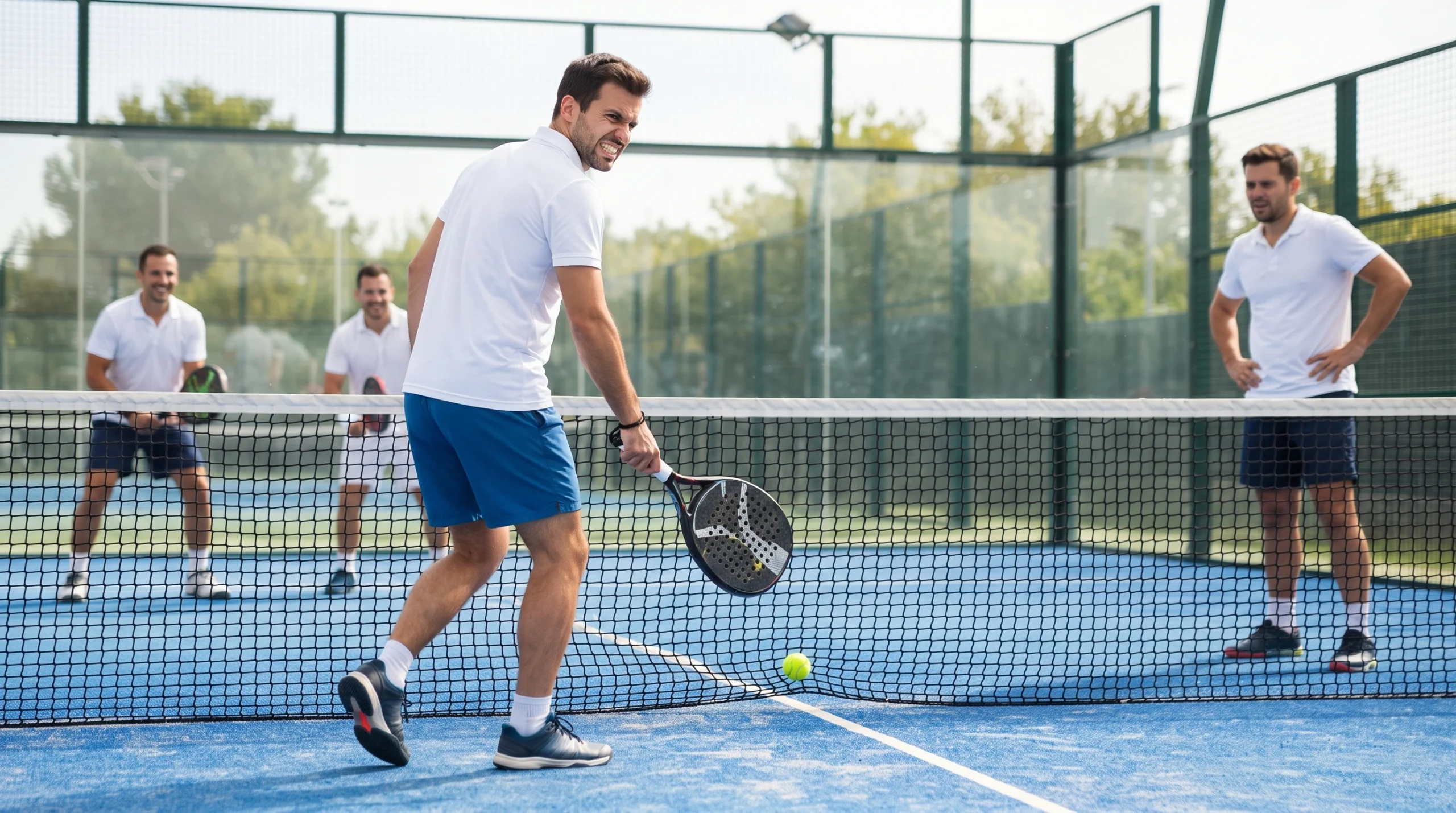
Tennis players tend to approach a padel ball similarly to a tennis ball. The reality is that a padel ball has lower internal air pressure (about 11 PSI versus 14 PSI for tennis) and a slightly smaller diameter. Hence, tennis players should not expect a rally ball to reach their racket above chest height.
The balls in padel will always be low due to a low internal air pressure. The tennis balls fly much more because of the high air pressure. Hence, you see more unforced errors in which shots go long or wide in tennis. In padel, players should ensure that they stay low and always on the front foot.
4. The Mental Block
One thing is to apply the physical side as a padel player; another is to apply the mental side. You can apply yourself mentally as a padel player, but the tennis habits won’t leave you automatically. You need to play padel quite often before you can mentally understand the difference between tennis and padel.
For example, if you are on the net and your opponent hits an outstanding passing shot, normally you will concede the point, thinking that the ball is past you. However, in padel, you need to stay switched on because you have to be aware of the deflection the wall will cause. If a tennis player switches off after a passing shot in padel, he will lose a great opportunity to come back into the point.
Hence, the wall is also the biggest mental block for a tennis player. The ability to stay switched on after a passing shot is the biggest test for a tennis player. However, the wall is not the only mental block that a tennis player faces.
Secondly, there is the court coverage. Normally, a tennis player would treat a court like an outdoor version. On an outdoor court, an athlete doesn’t care about the dimensions, as he can hit the ball outside of the court as well. On average, most of the baseline exchanges happen with the balls getting hit outside of the court.
In padel, such concepts do not make sense. Every shot is executed inside the court. If your opponent has hit a shot with a great angle, you cannot go outside of the court dimensions because of the sidewall. Hence, these things need to be addressed mentally.
Conclusion
Regardless of whether you are a tennis player playing padel or a padel player playing tennis, there is no doubt that your previous habits will come into play. For example, many tennis players struggle to play badminton because they cannot get used to the size of a badminton racket’s head.
Hence, the best approach is to treat each individual separately. For sure, there can be overlaps between racket sports. However, every sport has its own technique and way of play. Racketivity encourages racket players worldwide to excel in every aspect. We cannot wait to see you on court.