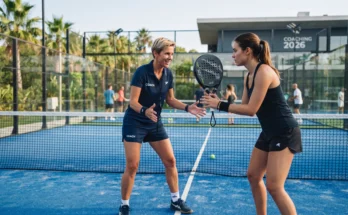
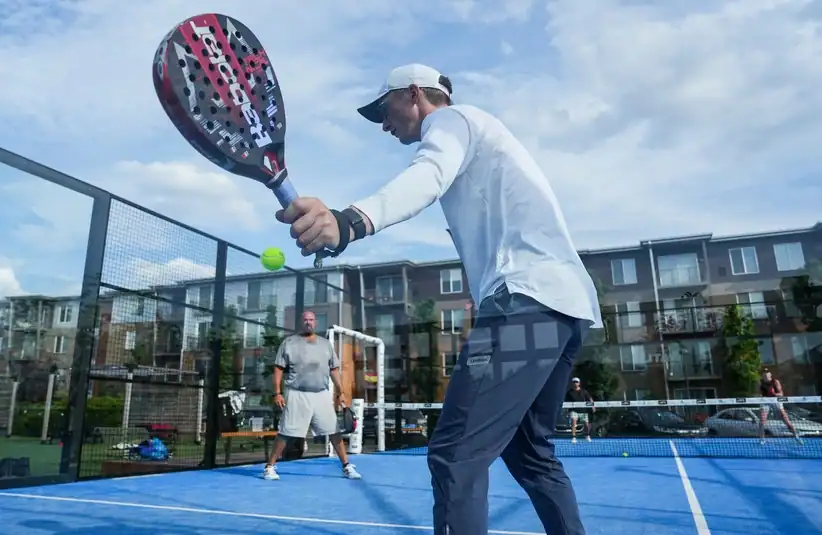
If you want to win more padel matches, start at the net. Players who get comfortable with the volley control the game, cut rallies short, and leave opponents scrambling. That’s the biggest difference between decent club players and those who actually take matches.
Most points in padel end up decided near the net because the court is so tight. Once you push forward with your partner, the other side has way less time and space. You force mistakes. You steal points that used to drag on forever. I’ve seen it dozens of times on courts in Karachi and beyond, and the pair that owns the volley game usually walks off happier.
Why the Volley Changes Everything in Padel
Getting good at volleys isn’t just flashy. You stop reacting from the back and start dictating. LTA Padel coaches put it simply: most points get won at the net, so you’d better feel at home there.
The Padel School drives this home too. A solid volley turns a long rally into your point in two or three shots. Stay passive at the baseline, and you hand over control. Move up aggressively, and suddenly you’re the one applying pressure.
Getting Your Ready Position Right
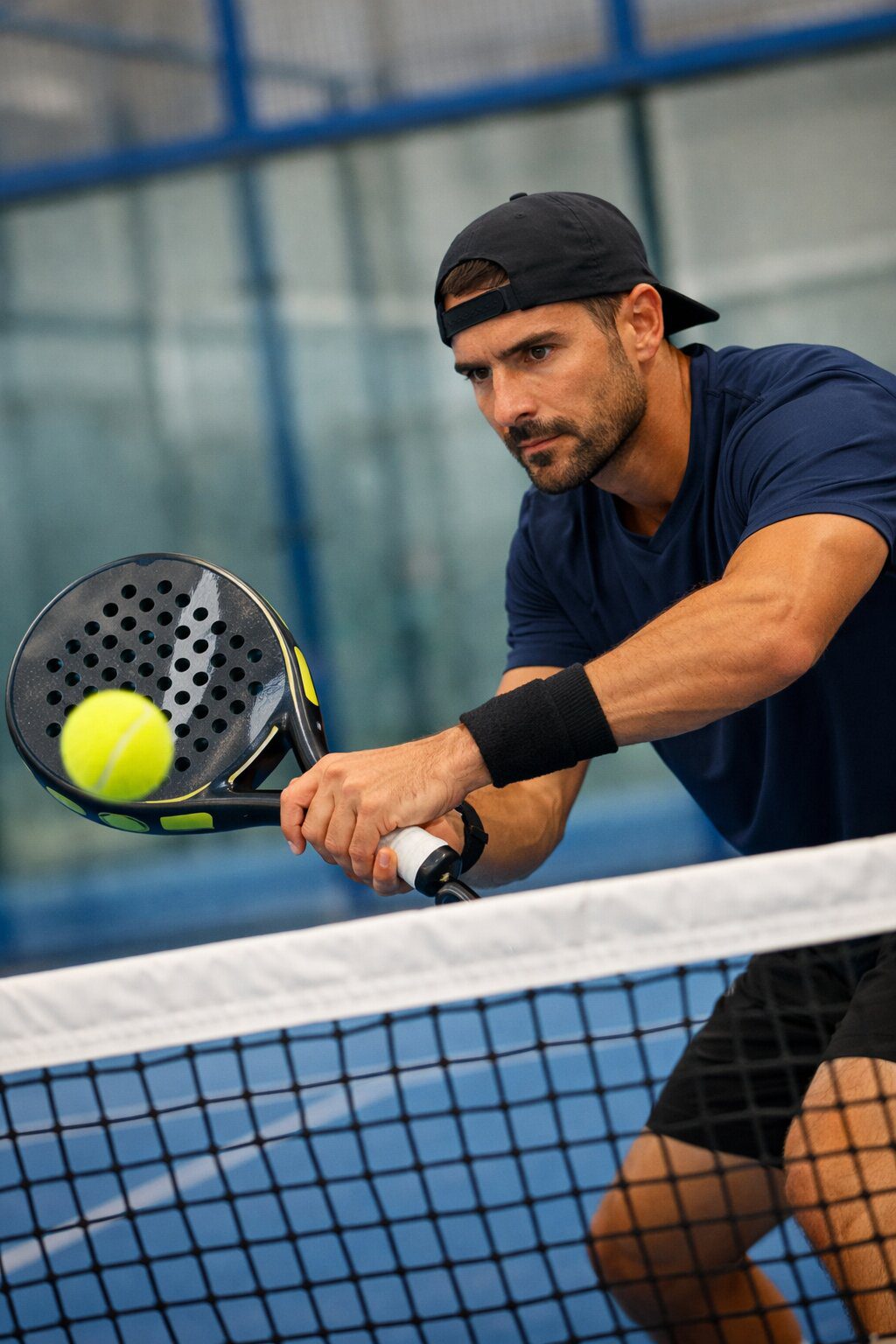
Start simple. Hold the racket up at contact height, slightly above the net. That way, you’re not constantly lifting it for every ball, and you can react faster. Keep it vertical in front of your body so you’re ready for both forehand and backhand without twisting around.
Use a continental grip. It gives you options. Pull the racket back only to shoulder level, turn your shoulders, then step in with the opposite foot. Contact the ball out in front with a firm block with no big tennis-style swing. Keep it compact and stable. That’s where the control comes from.
On the backhand, put your non-dominant hand on the throat of the racket for extra support. Bend those knees on low balls. And don’t crowd the net and leave yourself a half-step of room so you can push forward or step back for lobs. Standing glued to the tape just invites trouble.
The Main Types of Volleys You Need
You’ve got three basic feels to work with, according to LTA coaches:
- Block volley: Pure defense against hard shots. Just redirect it deep and safely.
- Push volley: When you’ve got a fraction more time, drive it deep to keep opponents pinned back.
- Fizz volley: The attacking one. Add a slice, cut under the ball, and watch it skid low after the bounce.
Slice is gold in padel. It keeps the ball down, messes with returns off the glass, and limits what your opponents can do.
The Short Volley: Your Point-Closing Weapon
This is the one that really hurts people. The short volley drops just over the net, ideally at their feet or tight to the side glass. You’re not smashing it, but you’re guiding it with soft hands and precision.
Stay on the balls of your feet, weight forward, racket high. Continental grip again. Read your opponents and change direction or pace at the last second. The best short volleys come when they’re expecting power and get touch instead.
Common screw-ups: swinging too hard, bad footwork, or forgetting to watch their positioning. Fix those, and this shot becomes a serious threat.
Drills That Actually Work
Theory is fine, but you need reps. Try the LTA depth drill: one pair at net, one at baseline. Baseline feeds, the net team must volley past the service line. Hit three good ones, then play the point out. Winners stay at the net. It forces you to focus on depth under pressure.
For short volleys, set up targets close to the net and practice dropping balls there consistently. Do quick reaction exchanges to sharpen timing. Switch ball brands occasionally to adapt to different bounces. Film yourself, and you’ll spot the small things fast.
Gear That Helps at the Net
Control rackets from Adidas, Bullpadel, Nox, Siux, Head, or Babolat make a real difference for touch volleys. A fresh overgrip stops slipping when hands get sweaty. Good shoes for quick lateral moves and split-steps matter more than you think. And consistent balls let you groove the feel without fighting weird flight.
Fixing the Mistakes That Kill Volleys
Many players hold the racket too flat or open their shoulders and wrists too early. That kills options. Others stand way too close and get lobbed constantly. Fix it by drilling that upright, ready position and giving yourself breathing room.
On backhands, keep the wrist firm. Don’t over-swing as volleys live on punch and placement. Small fixes here pay off quicker than you expect.
How It Feels When It Starts Clicking
There’s nothing quite like the moment your volleys start landing. Opponents start hanging back. Rallies end on your terms. You and your partner start moving like a real unit instead of two individuals guessing. That shift in confidence is addictive.
Watch any decent match, and you’ll see the net controllers running the show. They mix deep pushes with sneaky short ones, keeping everyone off balance. You don’t need to be a pro to steal that feeling, and just deliberate practice.
What to Do Next on the Court
This week, pick one thing. Session one: ready position and footwork only. Session two: work on the slice-and-fizz. Session three: short volleys and targets. Grab a hitting partner, keep it fun but focused, and track how many more points you finish at the net. Padel rewards the player willing to move forward. Put in the time on your volleys, and you’ll feel the difference in your next few matches.
Frequently Asked Questions (FAQs)
1. How is a short volley effective in padel?
The short volley is effective because it doesn’t rely on brute force. Instead, it relies on precision. All you require is to drop the ball gently above the net, and it falls low on the opponent’s feet.
2. How is slice ‘heaven’ in padel volleys?
Slice changes the ball’s impact after the first bounce. It reduces the ball’s height and ensures backspin. Hence, the ball will just die when hitting the glass.
3. What are the biggest common mechanical mistakes while executing a padel volley?
The biggest and most obvious mistake is the over-swinging. Tennis technique will always help you command the net. Moreover, the tennis technique will allow you to hold the racket too flat. This disables shot placements.