
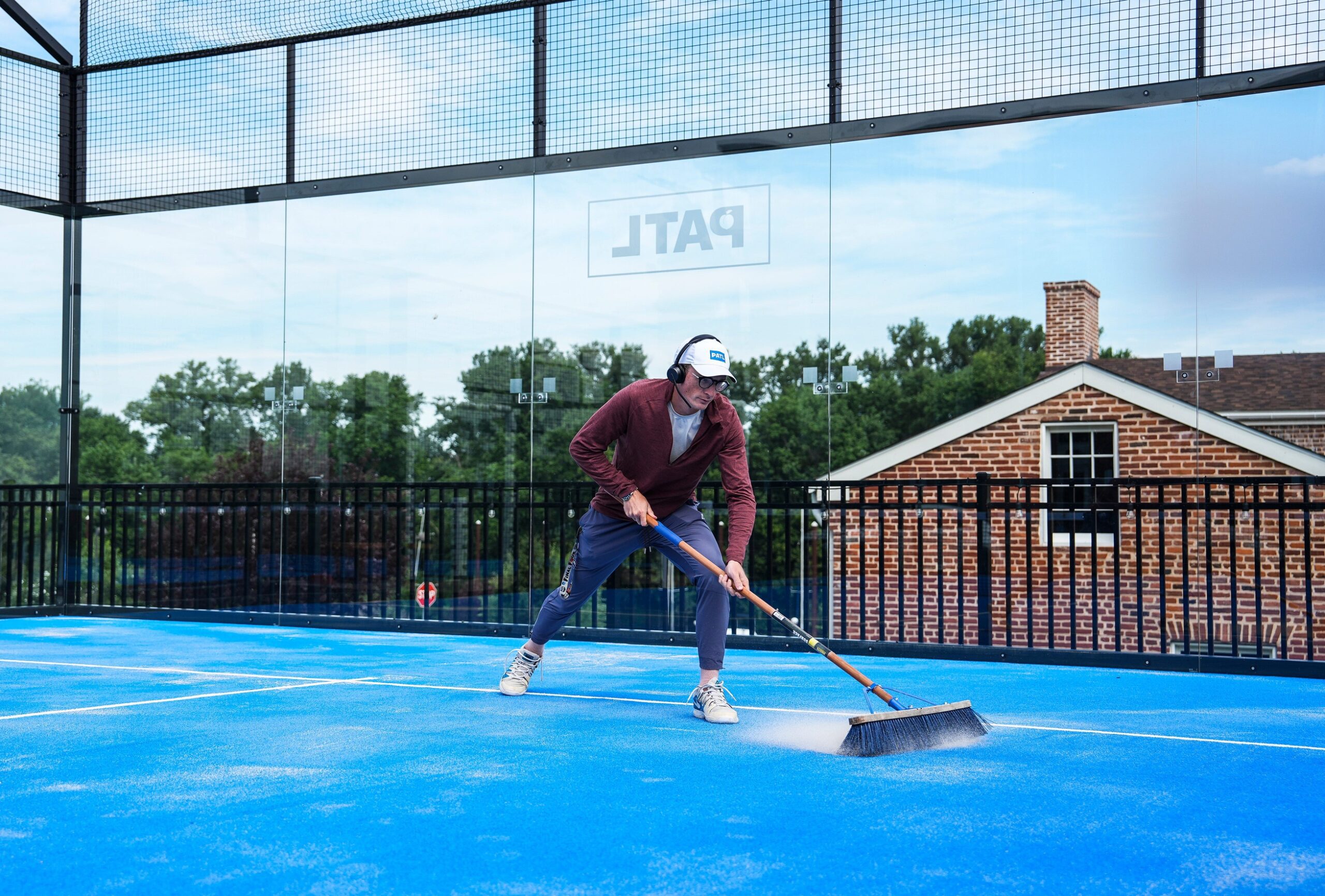
The United Kingdom (UK) is undergoing a sporting revolution. The number of active padel players is skyrocketing past 860,000 nationwide. What began as a rare pastime found only at holiday resorts in Spain has blown up into a massive mainstream phenomenon across England, Scotland, and Wales.
This rapid growth matters because it marks a fundamental shift in how British people spend their leisure time and fitness budgets. For decades, tennis, squash, and badminton have completely dominated the racket market. The sudden mainstream shift is forcing private equity firms, local councils, and commercial developers to pour millions of pounds into turning old urban zones, empty car parks, and worn-out tennis courts into modern padel spaces.
According to the latest data from the Lawn Tennis Association (LTA), this explosive boom is being driven by heavy private investment and an aggressive push to build new infrastructure. Official audits show that the national grid has expanded to more than 1,500 dedicated courts across 550 sites. That is a massive leap from the handful of isolated courts open just five years ago, proving that this trend is an enduring lifestyle change rather than a temporary post-pandemic fad.
Demystifying the Mechanics of Court Gameplay
To understand why is padel so popular in the UK, you have to look directly at how the game plays on the ground. It is almost always played as a doubles match on an enclosed court about a third of the size of a standard tennis court. It is played with solid carbon-fiber paddles instead of stringed rackets, and with balls at slightly lower pressure.
The biggest game-changer is the surrounding glass walls, which allow players to hit the ball after it bounces off the back or the sides, just like in squash. This means beginners do not have to spend half their time chasing stray balls across a massive court, letting them enjoy long, satisfying rallies from their very first hour.
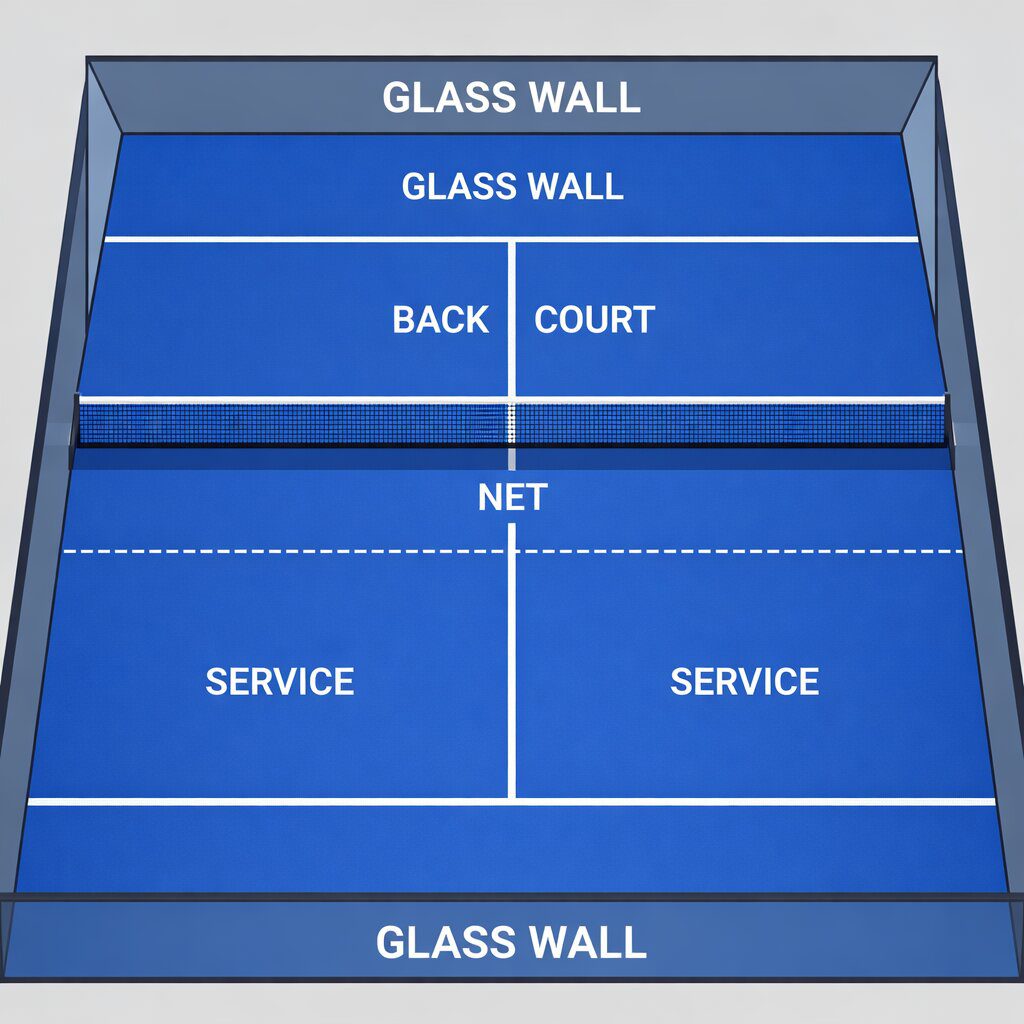
The physics of the space completely changes the competitive dynamic. Long, strategic points replace raw power, meaning players of different ages, fitness levels, and sporting backgrounds can play a tight, competitive match together. This instant feeling of success keeps people hooked, causing them to open their booking apps to lock in another slot before they even head home.
The Cultural Shift Toward Experiential Social Fitness Hubs
Beyond the technical style of play, the boom is tied to a distinct shift in British social habits. People are moving away from gym routines and local leagues for community-driven fitness experiences. Padel developers design their venues around this mindset; these sites are rarely just a group of courts, operating instead as complete lifestyle centers featuring independent cafes, juice bars, and casual lounge areas.
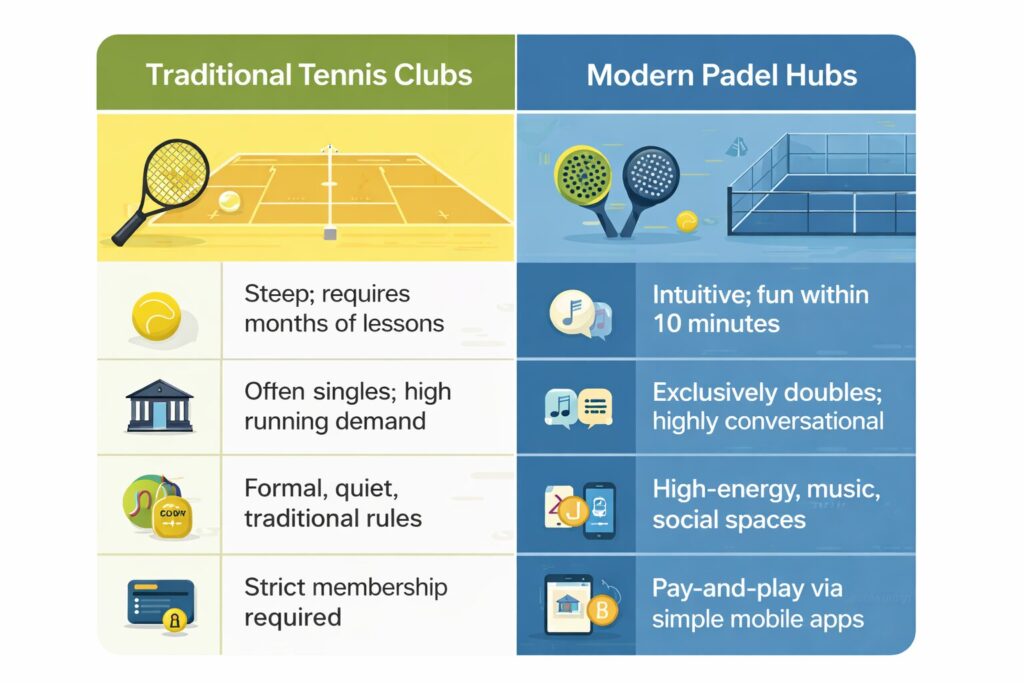
Because the game requires four players, it acts as an automatic social engine. The small court size keeps everyone close enough to talk, laugh, and joke around throughout the match. Data from booking networks like Playtomic shows that British players lead the way in using “open match” features, which allow individuals to sign up for open slots with people they have never met before. This easy interaction has made the sport incredibly popular for corporate events, family weekend gatherings, and casual friend groups looking for a healthier alternative to the local pub.
Celebrity Backing and the Premiumization of Racket Sports
The profile of the sport across the UK has received a massive boost from celebrity players and digital media coverage. Global icons like David Beckham, Andy Murray, and football manager Pep Guardiola have shared their love for the game online while backing major commercial brands building clubs across the country.
Seeing top-tier athletes and fitness creators post their matches online has removed the idea that padel is an exclusive or complicated sport. This cultural spotlight has created a premium market around the sport. Players can find an open court, rent top-grade paddles, and split the fee with friends in seconds.
Overcoming Infrastructure Bottlenecks and Climate Challenges
The massive commercial return on padel courts has started a real estate race among club owners and fitness brands. Historic golf and tennis clubs, facing declining membership numbers and high upkeep costs, have realized that converting one underused tennis court into a few padel courts can completely transform their finances. Padel courts fit more players into a smaller space and generate much higher hourly revenue than almost any other sport, making them highly attractive to investors seeking steady returns.
“Padel brings a completely fresh dynamic to our facilities. By utilizing spaces that used to sit empty during weekdays, we have built a self-sustaining revenue stream that keeps our venues busy from morning until late at night.”
Even with financial momentum, developers still face challenges to secure local planning permissions. To beat the unpredictable British weather and fix booking shortages, companies are investing heavily in indoor spaces. Over half of the country’s courts are housed in permanent buildings or covered by large weatherproof domes, ensuring people can play throughout the winter months.
Frequently Asked Questions (FAQs)
1. How fast is padel growing in the United Kingdom?
Ans: As for now, there are 860,000 active players nationwide in the UK.
2. What elements make padel addictive for beginners?
Ans: The biggest thing is the dimension. Everything happens inside the glass, which means there is less need for court coverage than in tennis or squash. The glass walls enable them to deflect shots rather than go for power.
3. How is padel changing British social habits?
Ans: People are no longer looking to be individually obsessed. They are not going into gym routines and prefer a community-driven culture; padel is the biggest trending example of that.
4. Which major figures have elevated padel’s status in the UK?
Ans: David Beckham, Andy Murray, and Pep Guardiola are the notable names to elevate padel’s status in the UK. Andy’s mother, Judy Murray, opened an academy dedicated to padel in Glasgow.
5. Does the UK have a major racket sports event happening anywhere?
Ans: Yes. Wimbledon is the biggest tournament not just in tennis, but potentially in all sports. People from all over the world come to witness its tradition. Outside of that, the ATP Finals were held at the O2 Arena between 2009 and 2020 before moving to Turin. The Laver Cup was also held at the O2 Arena, memorably in 2022 as Roger Federer’s final tournament.
The Future
The UK padel market is heading into a phase of broad regional growth as it expands from big cities into smaller communities. The next step will see clubs opening outside major hubs like London and Manchester. Market surveys show that millions of people across the country want to try the sport, pointing to a massive wave of new players ready to sign up as soon as local courts open.
On the organizational side, the UK is building structured junior paths, clear coaching certifications, and school tournaments to train the next generation of local talent. As the number of available courts catches up with the massive public demand, rental prices will balance out, making the game accessible to a much wider group of people. Backed by solid institutional support, a highly profitable business setup, and an incredibly dedicated community, padel is well on its way to becoming a permanent fixture of British sporting life.