The rise of padel courts indicates strong growth in padel across global markets. This sport aligns closely with modern sports infrastructure development and emerging recreational sports trends. Players now demand better facilities that improve comfort, safety, and gameplay quality.
Every padel court construction project reflects modern sports-facility design principles. Court types differ in structure, surface, and environment. These differences directly affect the padel gameplay experience, durability, and even the club’s revenue potential.
What Are the Different Types of Padel Courts?
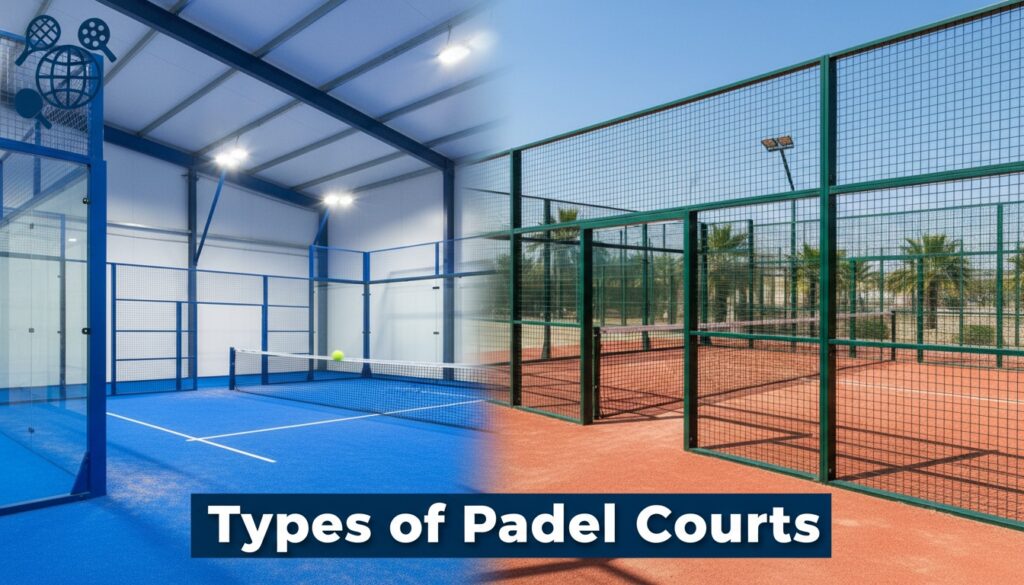
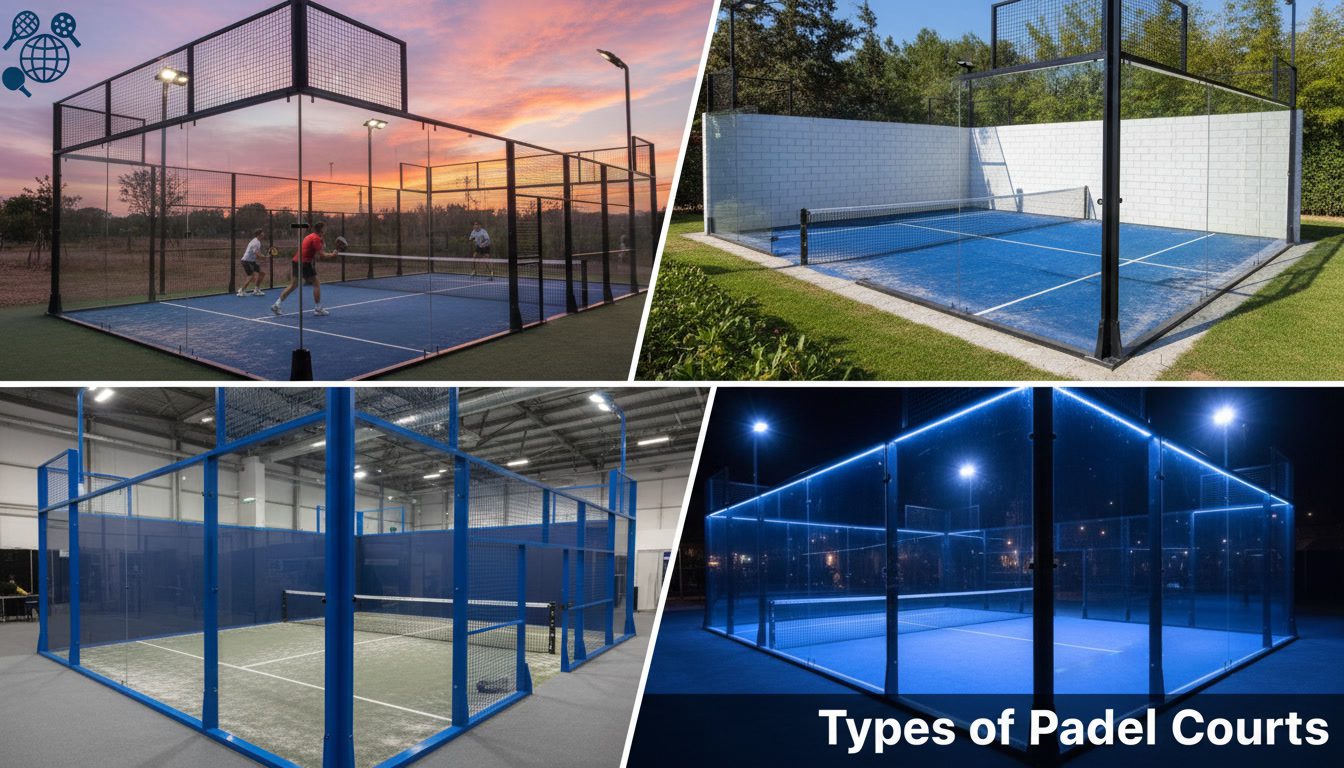
The world of padel court types depends on how courts are classified in modern sports systems. Each category affects padel accessibility and player experience in unique ways. Builders also consider sports venue design when selecting court types.
The main classifications include location, structure, players, and surface types. These categories shape padel club infrastructure and the long-term economic impact of padel. Understanding them helps clubs invest more effectively and boost padel’s popularity worldwide.
Types of Padel Courts Based on Location
The location defines how a court reacts to the weather and environment. It also influences the durability of sports courts and their maintenance needs. This category plays a major role in decisions about sports facility construction.
Indoor and outdoor setups change lighting, airflow, and comfort levels. They also influence padel court manufacturers’ planning decisions. Location selection directly impacts long-term performance and cost efficiency.
Indoor Padel Courts
Indoor padel courts offer controlled environments that support stable gameplay. They belong to modern indoor sports complexes designed for year-round use. Players enjoy consistent conditions without weather disruption.
These courts improve sports lighting requirements and reduce surface damage. However, ventilation must be strong to avoid heat buildup. Indoor setups are common in urban sports facility design projects.
Outdoor Padel Courts
Outdoor padel courts provide natural air and open space gameplay. They are common in outdoor sports facilities with flexible design structures. These courts depend heavily on weather conditions.
Strong materials enhance the weather resistance of sports courts. Exposure to sunlight and rain increases maintenance needs. Still, outdoor courts support strong returns on investment in recreational facilities in many regions.
Types of Padel Courts Based on Court Structure
Court structure defines strength, visibility, and overall aesthetics. It also shapes modern sports architecture and fan experience. Structural design affects long-term durability and cost.
Different padel court structures also influence the optimization of the sports experience. Glass-based designs dominate modern competitions and club installations.
Concrete and Brick Padel Courts
Concrete courts offer high durability and simple construction. They were common during the early development of racket-sport courts. These courts deliver a stable bounce but less visual appeal.
They support the construction of basic sports facilities at a lower cost. However, modern clubs now prefer advanced materials for better performance.
Glass Padel Courts
Glass padel court systems use tempered glass panels for visibility and safety. They improve the spectator experience in glass-enclosed sports court designs. This structure is now industry standard.
Glass courts enhance the consistency of ball rebound surfaces and visual appeal. They also support high-level tournament environments, such as Premier Padel courts.
Club Padel Courts
Club courts use framed steel systems with balanced performance. The steel frame structure provides stability and longevity. These courts are common in training centers.
They support growing club memberships and recreational demand. Many clubs use them for community-level matches.
Semi-Panoramic Padel Courts
Semi-panoramic padel court designs reduce some structural barriers. They improve visibility while maintaining safety. These courts balance cost and experience.
They are widely used in mid-level tournaments and club setups. Players enjoy better crowd interaction.
Panoramic Padel Courts
Panoramic padel court systems offer wide viewing angles. They enhance broadcasting quality in World Padel Tour facilities. This design improves fan engagement.
They are popular in modern competitive setups. Visibility is a key advantage here.
Super Panoramic Padel Courts
Super panoramic padel court designs remove almost all visual barriers. They maximize spectator experience and media coverage. These courts represent elite-level construction.
They are used in international events and premium clubs. Their design improves global tournament branding.
Types of Padel Courts Based on the Number of Players
Court size affects gameplay style and strategy. It also impacts multi-player sports courts planning in facilities. Player format defines court dimensions.
This category is important for urban sports development projects. It supports different training needs and competition formats.
Singles Padel Courts
Individual padel court designs support one-on-one matches. They improve training efficiency and skill development. These courts are smaller in size.
They help players improve reaction time and control. They are less common in professional events.
Doubles Padel Courts
Double padel court formats dominate global competitions. They follow the official padel court dimensions standards. Most clubs use this format.
Doubles play improves teamwork and strategy. It is the standard in professional tournaments.
Types of Padel Courts Based on Playing Surface
Surface type controls speed, bounce, and comfort. It strongly affects the padel court surface quality and player performance. Surface selection is critical in design.
It also affects decisions on high-performance sports flooring. Different materials suit different playing styles.
Artificial Turf Padel Courts
Artificial-turf padel court systems dominate global use. They offer balanced speed and comfort. They support consistent gameplay.
This surface improves artificial-grass sports performance. It is widely used in clubs.
Monofilament Artificial Turf Courts
Monofilament turf offers strong traction and durability. It supports aggressive playing styles. Sand infill increases stability.
It is common in professional training environments.
Texturized Artificial Turf Courts
Texturized turf reduces visible sand levels. It improves sliding control and movement. Players get smoother gameplay.
It is ideal for advanced players.
Cement Padel Courts
Cement padel court surfaces offer fast ball speed. They belong to older sports infrastructure development systems. They are less common today.
Now they are cost-effective but harder on joints. Maintenance remains simple.
Synthetic Resin Padel Courts
Synthetic resin padel court systems provide a strong grip and control. They support fast and technical gameplay. They are premium installations.
Now they are used in selective competitive environments.
Official Padel Court Dimensions and Specifications
Padel court dimensions follow strict international rules. Standard size ensures fair competition and uniform gameplay. These standards support global sports venue design.
Proper design improves sports court durability and safety. Lighting and structure must meet regulatory requirements.
A standard table of measurements:
| Element | Standard Value |
|---|---|
| Court Length | 20 meters |
| Court Width | 10 meters |
| Net Height | 88 cm center |
| Glass Thickness | 10–12 mm |
These rules guide padel court manufacturers worldwide.
How to Choose the Right Type of Padel Court
Choosing depends on usage, budget, and environment. It also affects recreational sports trends and business returns. Each decision shapes long-term success.
Clubs must balance padel accessibility and maintenance costs. Proper selection improves user satisfaction.
Indoor courts suit controlled environments. Outdoor courts support natural gameplay. Budget also influences material quality and design.
How Much Does It Cost to Build a Padel Court?
Cost depends on structure, surface, and location. It is a key factor in sports facility investment planning. Glass courts cost more than basic structures.
This topic connects directly to sports facility construction trends. A detailed guide is available here: How Much Does It Cost to Build a Padel Court?
Indoor installations increase cost due to infrastructure needs. Outdoor courts reduce construction costs but increase maintenance costs.
Which Type of Padel Court Is Best?
The best choice depends on the purpose and audience. Clubs often prefer glass panoramic designs. These improve club membership growth and engagement.
Tournament courts require full-panoramic padel court systems. Private owners prefer simple turf courts. Durability also plays a key role.
Final Thoughts on Padel Court Types
The world of padel court types is evolving quickly as the sport continues to grow across clubs, cities, and international tournaments. Each court design offers a different playing feel, ranging from simple structures to advanced panoramic arenas. These choices influence gameplay quality, audience experience, and long-term investment value for facility owners.
Modern trends in padel construction show a clear shift toward smarter designs that improve visibility and performance. Clubs and investors now focus on durability, comfort, and user experience while planning new courts. Platforms like Racketivity are helping promote a better understanding of court systems and supporting the global rise of structured padel development.