
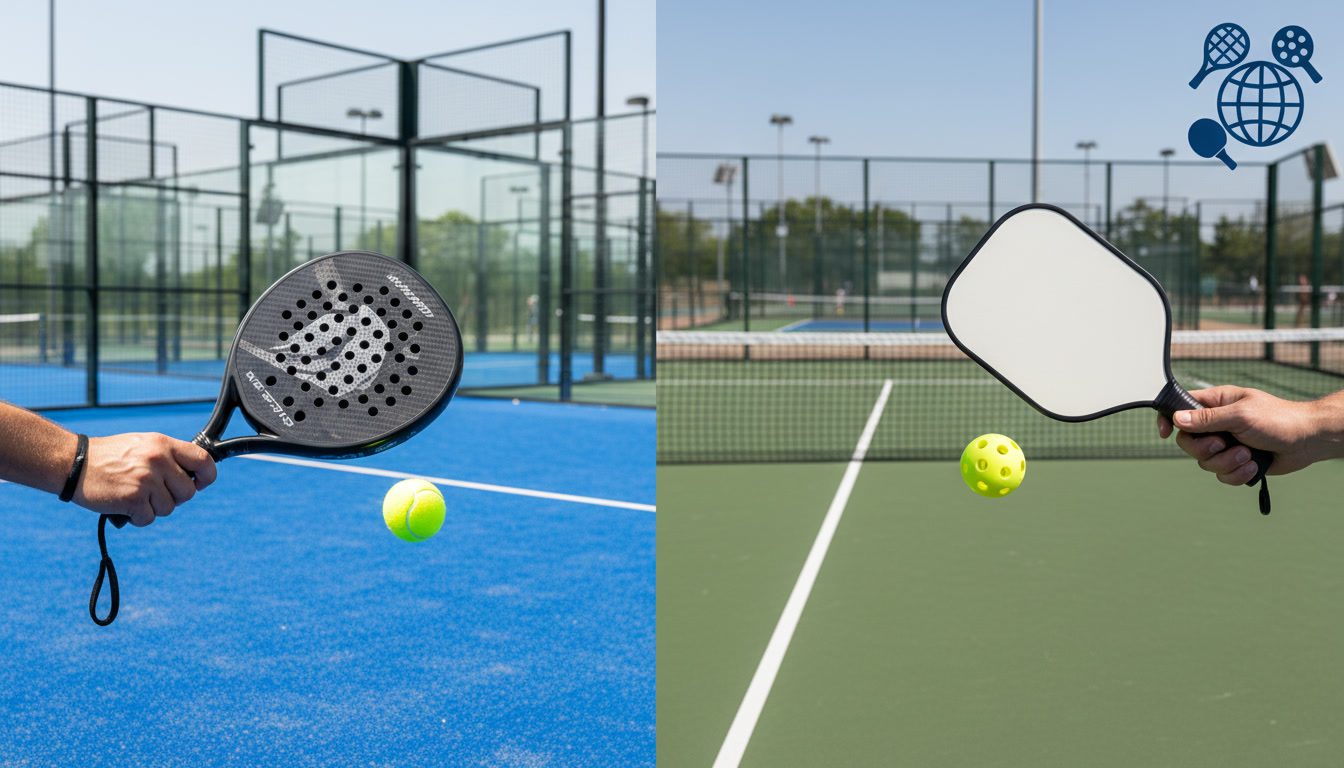
The debate around padel vs pickleball has become bigger than ever. Both sports are among the world’s fastest-growing sports and attract millions of new players each year. At first glance, they look similar because both belong to the family of racket sports and paddle sports. However, once you step onto the court, the experience becomes very different. From the way the ball moves to the rules and strategy, each game offers its own unique challenge.
If you are trying to understand the difference between padel and pickleball, this guide will help you make the right choice. We will compare courts, equipment, rules, scoring systems, gameplay, fitness demands, and overall enjoyment. By the end, you will know which beginner-friendly sport best suits your goals.
What Are Padel and Pickleball?
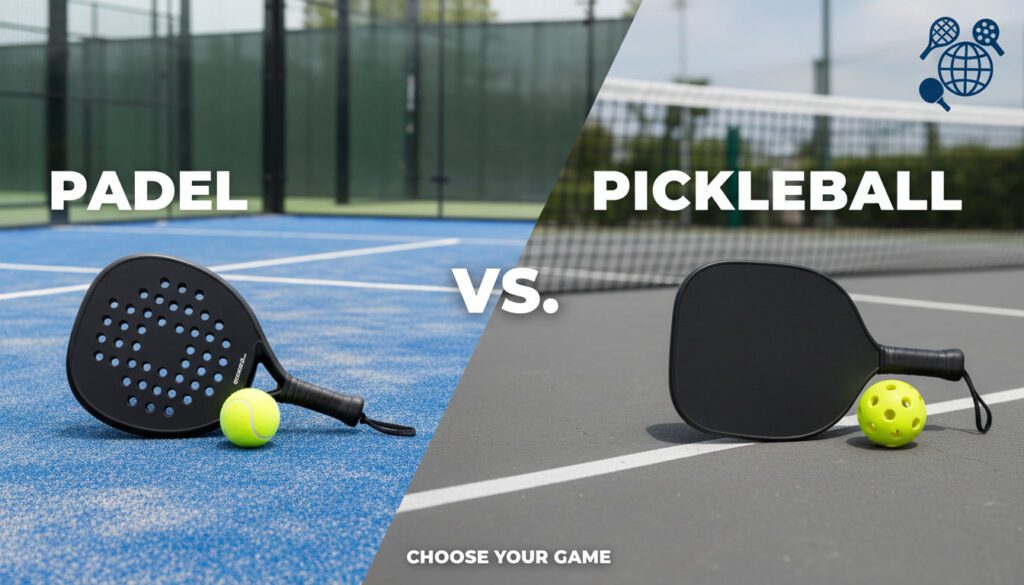
Padel and pickleball may share some similarities, yet they developed in different ways. Padel originated in Mexico and quickly spread through Spain, Europe, and the Middle East. Pickleball began in the United States and has become one of the most popular recreational sports in North America. Both encourage participation in social sports and create a welcoming environment for new players.
What Is Padel?
Padel is played on an enclosed court surrounded by glass walls and metal fencing. A standard padel court measures 20m by 10m. Players use a padel racket with no strings and a perforated design. The game relies heavily on padel wall play, smart angles, and creative shot-making.
What Is Pickleball?
Pickleball is played on an open court that resembles a smaller tennis court. A standard pickleball court includes a special no-volley zone, commonly known as the kitchen area. Players use a pickleball paddle and a lightweight pickleball ball. The game is easy to learn and attracts players of all ages.
Why Are These Sports Growing So Fast?
Many people are choosing these growing racket sports because they are easy to start and highly social. Facilities continue expanding worldwide. Both sports reward technique more than raw power. This creates excellent player accessibility and helps beginners enjoy matches quickly without years of training.
Padel vs Pickleball Court Dimensions and Playing Environment
One of the biggest differences in padel vs pickleball comes from the court itself. A court size comparison shows that padel courts are much larger than pickleball courts. Padel uses enclosed playing areas with service boxes and walls that remain active throughout each point. Pickleball uses a simpler court layout designed around quick exchanges near the net.
The playing environment changes strategy dramatically. In padel, wall rebounds and ball rebound mechanics create longer rallies and more creative solutions. Pickleball focuses on net play, soft touches, and control around the kitchen area. These design differences shape every part of the match.
| Feature | Padel | Pickleball |
|---|---|---|
| Court Type | Enclosed court | Open court |
| Walls Used | Yes | No |
| Court Size | 20m x 10m | 13.41m x 6.09m |
| Kitchen Zone | No | Yes |
| Main Style | Wall-assisted gameplay | Net-focused gameplay |
Equipment Differences Between Padel and Pickleball
Equipment plays a major role in the difference between padel and pickleball. A padel racket is thicker and often made from carbon fiber or fiberglass racket materials. Players can choose a round-shaped racket for control or a diamond-shaped racket for power. These designs create either a control-oriented racket or a power-oriented racket, depending on playing style.
Meanwhile, a pickleball paddle uses a flat paddle design. The ball is equally important. A padel ball is a low-pressure tennis ball, while a pickleball ball is a plastic ball with holes. These differences affect bounce and speed, spin generation, and shot control. As a result, the feel of each sport becomes completely unique.
Padel vs Pickleball Rules Explained
Although both sports use an underarm serve, the rules quickly separate them. Every point begins with a diagonal serve into the correct service box. Both games follow a one-bounce rule before certain actions can occur. However, padel allows walls to remain part of the rally.
Serving Rules
The serve in both sports must stay below waist height. Players start with an underarm serve directed diagonally. Accuracy matters more than power because a good serve sets up the next return shot and creates early pressure.
Rally Rules and Gameplay
Once the rally begins, the differences become clear. Padel encourages wall-assisted gameplay and tactical use of wall rebounds. Pickleball follows strict volley restrictions because of the pickleball kitchen rule. Players must respect the no-volley zone before attacking near the net.
Singles vs Doubles Formats
Padel mainly uses a doubles format and thrives as a social doubles game. Pickleball supports both singles and doubles formats. This flexibility helps players choose between recreational fun and serious competitive play.
Scoring System Differences Between Padel and Pickleball
Understanding scoring helps new players adapt faster. Padel scoring follows the traditional tennis scoring system, with points progressing from 15 to 30 to 40. If players reach 40-40, the game enters deuce. Winning the next point earns an advantage point before the game can be secured.
In contrast, pickleball scoring uses a simpler format. Most games are played to first to 11 points and require a two-point winning margin. The score includes the serving team, the receiving team, and the server number. Many beginners find pickleball scoring easier to understand initially.
Gameplay, Strategy and Shot Selection Compared
Skill development looks very different in each sport. Effective shot selection depends on court design, ball behavior, and positioning. Padel rewards patience, creativity, and smart use of walls. Pickleball focuses on precision, consistency, and quick reactions near the net.
Common Padel Shots
Padel includes advanced techniques such as La Chiquita, La Bandeja, the smash shot, and defensive lobs. These shots support a strong padel strategy and help players control space while preparing opportunities for attacking play.
Common Pickleball Shots
Pickleball players frequently use the dink shot, drop shot, drives, and volleys. Soft touches often beat power. Successful players master placement rather than relying on speed alone.
Tactical and Skill Differences
The biggest difference comes through tactical play, player positioning, and decision-making. Padel demands awareness of walls and angles. Pickleball emphasizes net-front strategy and rapid exchanges. Both require excellent player coordination and concentration.
Physical Demands, Learning Curve and Accessibility
Many newcomers ask which sport is easier. The answer depends on personal preference. Pickleball generally offers a shorter learning curve because the rules are simpler and the court is smaller. This makes it one of the most approachable beginner racket sports available today.
Padel often requires greater movement because of its larger court and extended rally patterns. Strong athleticism helps, but technique remains more important than physical strength. Both sports provide excellent workouts and can improve endurance, balance, and coordination while remaining accessible to players of different ages.
Padel vs Pickleball Popularity, Benefits and Which Should You Choose?
The popularity of padel vs pickleball continues to rise around the globe. New facilities open every year as more people discover these exciting sports. Whether you prefer a casual recreational doubles sport or a highly competitive racket game, both options offer rewarding experiences and long-term enjoyment.
Benefits of Playing Padel
The main padel benefits include strategic depth, exciting rallies, social interaction, and constant learning opportunities. Players enjoy dynamic movement and unique wall-based tactics rarely found elsewhere.
Benefits of Playing Pickleball
The biggest pickleball benefits include affordability, simplicity, and accessibility. The sport welcomes players of all ages and fitness levels while still providing a fun challenge.
Which Sport Is Right for You?
If you enjoy strategy, longer rallies, and creative wall usage, padel may be your ideal choice. If you prefer quick learning, simple rules, and flexible formats, pickleball may fit better. In the end, the best choice is the one that keeps you active, engaged, and eager to return to the court.
Final Thoughts
When comparing padel vs pickleball, there is no universal winner. Both sports offer outstanding exercise, social connections, and skill development. The real decision depends on your goals, available facilities, and preferred style of play.
For players who enjoy tactical rallies and wall-based creativity, padel stands out. For those seeking accessibility and simplicity, pickleball remains an excellent option. Either way, you will be joining a community that loves competition, fitness, and fun.


One Comment on “Padel vs Pickleball: Key Differences, Rules, Equipment & Which Sport Is Right for You?”