If you needed any more proof that the center of gravity in the racquet sports world is shifting east, you just got it. For a long time, the narrative was simple: Spain is the heart, Argentina is the soul, and everywhere else is just a vacation stop. But this week, the United Arab Emirates didn’t just host padel they reimagined it. In a span of 48 hours, we saw two distinct sides of the sport’s explosion in the region.
On one side, you had the glitz, the glamour, and the absolute surrealism of the “Ultimate Padel Match” in Abu Dhabi. On the other, you had the grind, the sweat, and the ranking-point warfare of the FIP Silver Damac in Dubai. Between a one-night-only civil war between the world’s best team and a stacked bracket at the NAS Sports Complex, the message was loud and clear: The UAE isn’t just participating anymore. They’re driving the bus.
The Night the Kings Split Up
Let’s start with the headline grabber. The “breakup.” Arturo Coello and Agustín Tapia have spent the better part of the last year making the rest of the tour look like they are playing in slow motion. We are talking about a pair that dominated 2025 with a win rate hovering above 90 percent. A 47-match winning streak set the tone for their dominance. Thirteen titles followed, stacked up with effortless consistency. For all intents and purposes, they became the sport’s ultimate cheat code.
So, what do you do when nobody can beat you? You play each other. The exhibition at the Space42 Arena in Al Raha Beach wasn’t part of the official calendar, but try telling that to the fans in the stands. Seeing Coello and Tapia on opposite sides of the net is like seeing Lennon and McCartney trying to out-sing each other on the same stage. It just doesn’t happen.
Coello teamed up with the relentless Jorge “Coki” Nieto, while Tapia paired with Federico Chingotto. For the uninitiated, this wasn’t just a random draw. This was a tactical masterclass in matchmaking. You put Coello, the most devastating aerial weapon in the game, with Nieto, a man who covers court like he has a twin brother hiding in the bleachers.
On the other side, you have Tapia, the Mozart of padel, playing with Chingotto, a defender so precise he could probably thread a needle while sprinting backwards.
The Real Grind Happening in Dubai
While the exhibition grabbed the Instagram highlights, the real war was waging down the highway. The FIP Silver Damac tournament at the NAS Sports Complex in Dubai offered something less shiny but arguably more important: a pathway to the top.
Exhibitions are fun, but the tour is built on the backs of tournaments like this. With 80 ranking points and a €20,000 prize purse on the line, the intensity in Dubai was a stark contrast to the festival atmosphere in the capital.
Look at the entry list. This wasn’t a “show up and cash a check” situation. You had 18 top-50 ranked players grinding it out. When you have guys like Javi Garrido and Lucas Bergamini headlining your men’s draw, you know it’s serious business.
Garrido is one of the few players on earth who can match Coello for raw power, and Bergamini brings that classic Brazilian flair and tactical intelligence. They’ve been knocking on the door of a major title for months—flirting with glory in Marseille and at the CUPRA FIP Finals—and they came to Dubai with a point to prove.
On the women’s side, the bracket was equally hostile. Noa Canovas and Laia Rodriguez didn’t come to sightsee. They came to solidify their standing in a tour that is becoming deeper and more competitive by the week.
Why Dubai is Becoming the New Center Court
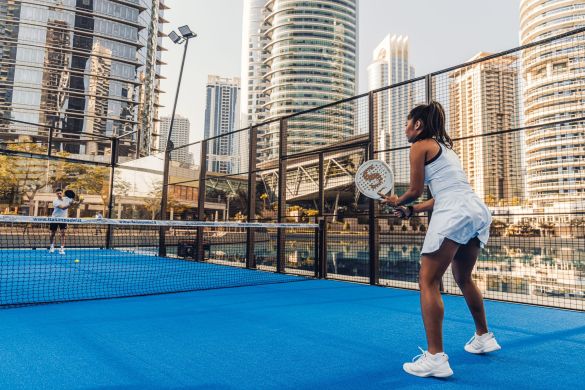
We need to talk about the infrastructure. You don’t attract this level of talent by accident. The NAS Sports Complex in Dubai has quietly become one of the premier facilities in the world. It’s not just about having glass courts; it’s about the recovery facilities, the logistics, and the fan experience.
The UAE has played the long game here. A few years ago, hosting a P1 event was a novelty. Now? It’s a staple. We’ve seen P1 events in Riyadh and Dubai, and the level of local engagement is skyrocketing. It’s no longer just expats watching; the local Emirati population has embraced the sport with a fervor that rivals football.
When you look at the trajectory, the strategy is brilliant. Use the massive exhibitions in Abu Dhabi to grab the headlines and get the casual fans in the door. Then, use the high-level technical tournaments in Dubai to build the legitimacy and the grassroots culture. It’s a one-two punch that Spain and Argentina should be watching nervously.
The “Golden Boys” and the Future
Let’s circle back to Coello and Tapia for a second. Their decision to split for the Abu Dhabi night says a lot about where they are mentally. They are so comfortable at the top that they can afford to have fun with it. That 2025 season was historic—records and titles that might stand for decades.
But the gap is closing. The performance of players like Pol Hernandez and Guille Collado at the previous Dubai P1 event proved that the next generation isn’t waiting for an invitation. They are kicking the door down. The FIP Silver Damac is exactly where these future stars are forged. Today they are fighting for 80 points in Dubai; tomorrow they are challenging Coello and Tapia on Sunday at a Major.
What This Week Actually Means
If you’re just looking at the box scores, you missed the story. The story isn’t who won the exhibition match or who hoisted the trophy on Sunday in Dubai. The story is that the padel calendar has a new gravitational pull.
For years, players planned their seasons around the European summer. Now, the Middle Eastern swing is becoming non-negotiable. Commercial growth in the region is fueling sponsorships that enable players to make a real living. The media coverage is expanding. The grassroots participation is exploding.
Abu Dhabi proved they can put on a show that rivals the NBA All-Star weekend. Dubai proved they can host a competitive grinder that rivals any Challenger event in Madrid. We are watching the globalization of a sport in real-time. Padel is shedding its image as a niche European-South American pastime and becoming a true world sport.
So, keep your eyes on the rankings when the dust settles in Dubai. The names you see climbing the ladder there are the ones you’ll be seeing on TV for the next decade. And as for Coello and Tapia? They’ll be back on the same side of the net soon enough. And that is bad news for everyone else. But for one night in the desert, and one week in the city, the UAE showed us exactly what the future of padel looks like. And the future looks bright.
The Padel Revolution at Rayner Lane and Its Impact on Local Clubs
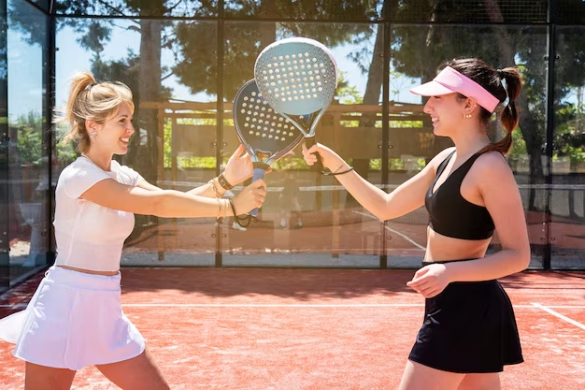
While Dubai and Abu Dhabi are shaping padel on a global scale, the sport’s true strength lies in the transformation of local clubs. A powerful example is the development at Rayner Lane, where traditional sports infrastructure has been reimagined to accommodate modern padel courts. This shift reflects a wider movement happening worldwide, as established clubs are adapting to meet the growing demand for padel.
Facilities like Ashton Cricket Club show how integrating padel courts can revitalize community engagement, attract younger players, and create new revenue streams. The Rayner Lane transformation demonstrates that padel is not just expanding in major cities but also breathing new life into local sports institutions.
Want to Learn More About Padel or Get in Touch With Us?
If you are new to padel or want to deepen your understanding of the game, explore our complete padel guide where we cover rules, equipment, court structure, and expert tips to help you get started. And if you would like to know more about who we are, what we do, or how we support the growth of padel, visit our About Us page or contact our team . We are always happy to connect, answer your questions, and help you become part of the padel community.