Choosing a racket is not just a purchase. It is a turning point in your game. This guide on how to choose a padel racket helps you understand everything in a simple and natural way, so you stop guessing and start playing smarter. Many players waste months using the wrong racket without realizing it.
A right racket improves timing, comfort, and shot confidence. That is why this padel racket buying guide focuses on real court experience, not just technical talk. You will understand padel racket control vs power, balance, materials, and feel in a way that actually connects with how you play every day.
Padel Racket Shapes Explained
Shape is the first real decision that shapes your entire game style. The padel racket shapes explained section shows how structure changes control, speed, and hitting comfort during rallies. Many beginners ignore this step and struggle later without knowing why.
A racket shape decides how the ball reacts when you hit it. It also affects your swing path, control level, and power output during pressure points in a match.
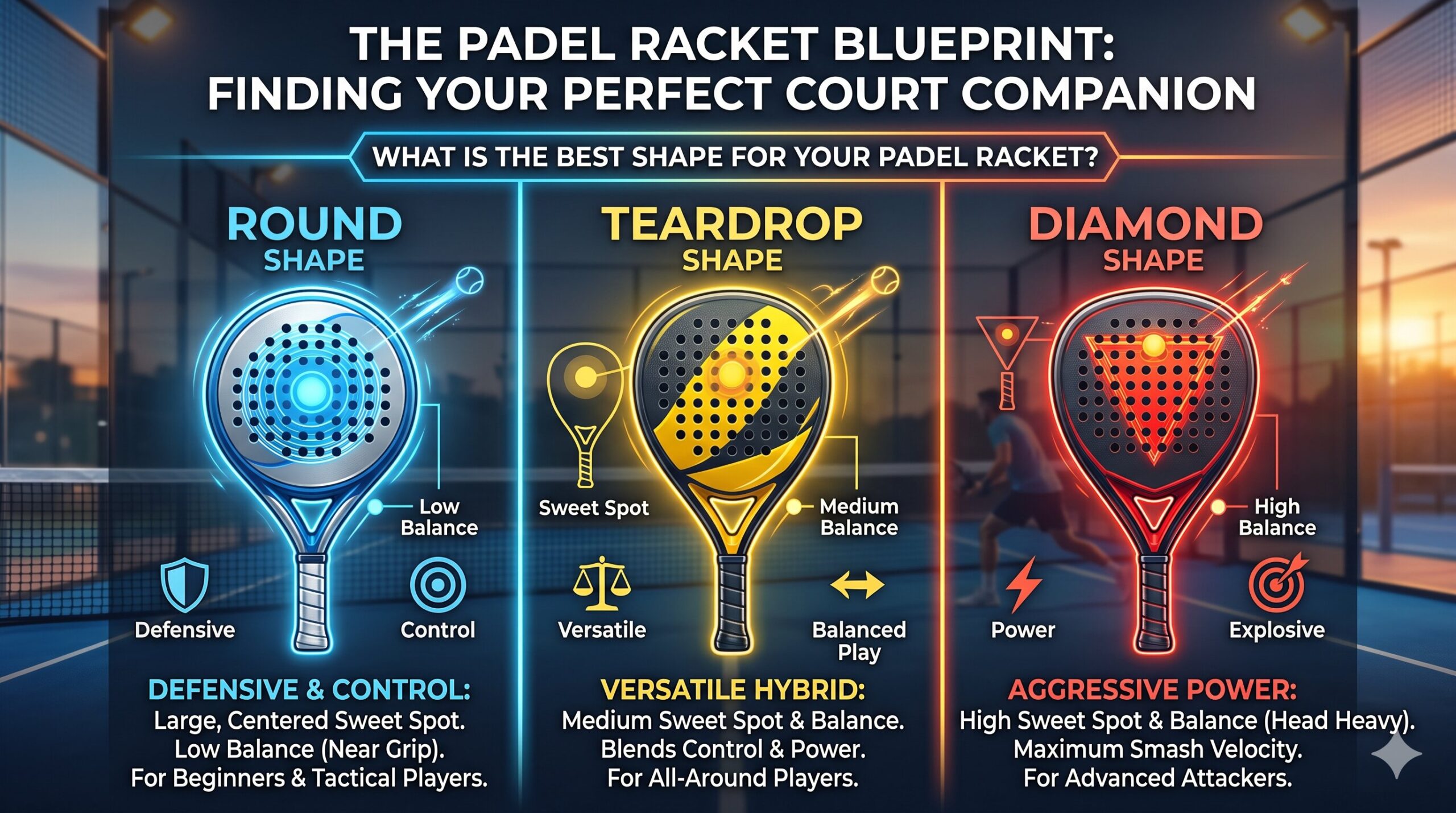
There are three main designs known as round teardrop diamond racket types. Round gives control and safety. Teardrop balances both worlds. Diamond focuses on aggressive finishing shots and explosive attacks.
Interestingly, shape also affects learning speed. Beginners improve faster with round shapes because the sweet spot is larger and more forgiving.
Round vs Teardrop vs Diamond
This comparison sits at the heart of every padel racket buying guide. Once you understand this, choosing becomes much easier and more logical, rather than emotional or random.
Round rackets support defensive control and clean placement. Teardrop rackets sit in the middle and give flexibility. Diamond rackets deliver aggressive power for attacking players who like to finish points quickly.
Here is a simple breakdown for clarity:
| Shape | Strength | Weakness | Best Style |
|---|---|---|---|
| Round | Control and stability | Lower power | Defensive players |
| Teardrop | Balanced feel | Medium precision | All-round players |
| Diamond | Strong attacking shots | Less control | Offensive players |
These shapes directly define padel racket control vs power, especially when rallies become fast and unpredictable.
Racket Balance Guide
Balance changes how a racket behaves in your hand. It is not just about weight but also how that weight spreads across the frame. That is why padel racket balance types matter so much for performance.
There are three main types: head-heavy, neutral, and head-light. Each one creates a different playing rhythm and comfort level during long matches.
Head-heavy rackets increase shot power but reduce reaction speed. Head-light rackets feel quick and easy for defense. Neutral balance stays in the middle and offers steady performance for all situations.
This also connects strongly with the head-heavy vs head-light racket feel during volleys and smashes. Small changes in balance often feel bigger than changes in weight.
Choosing the Right Weight
Weight plays a silent but powerful role in your game. The padel racket weight range usually stays between 345g and 375g, but even a few grams change comfort and control.
Light rackets help with speed and fast reactions at the net. Heavy rackets give stronger shots and better stability during powerful rallies.
Choosing the wrong weight can cause early fatigue or slow swings. It can also increase the risk of tennis elbow among padel racket players, especially during long sessions without breaks.
A smart player always tests comfort first, not just numbers. Feel matters more than specifications in real matches.
Hard vs Soft Rackets
Racket stiffness decides how the ball responds when it hits the surface. Hard rackets feel sharp and explosive. Soft rackets feel smooth and forgiving.
This is where the padel racket materials comparison becomes very useful for understanding performance differences. Hard surfaces reward skillful timing. Soft surfaces help players who are still learning consistency.
The difference between an EVA padel racket and a foam core padel racket is important here. EVA cores feel firmer and give more power. Foam cores feel softer and improve comfort and control.
Players who want aggressive finishing often prefer hard rackets. Players who value long rallies and comfort lean toward soft options.
Padel Racket Materials
Materials decide durability, performance, and long-term comfort. Carbon and fiberglass are the two most common choices in modern rackets.
Carbon is strong, stiff, and powerful. Fiberglass is flexible, soft, and easier to control. This clear carbon vs fiberglass racket difference affects every shot you play.
Carbon rackets usually suit experienced players with good timing. Fiberglass rackets help beginners build confidence without punishment for small mistakes.
Material quality also affects padel racket durability and frame, especially when playing frequently or hitting hard smashes under pressure.
Grip Size and Comfort
Grip is often overlooked, but it governs your entire connection to the racket. A poor grip reduces accuracy and increases strain on the wrist and elbow.
This section explains how to adjust a padel racket grip size in a practical way. Since padel rackets don’t come in multiple sizes, players adjust the grip manually.
Most players use overgrips to improve comfort. Some use undergrips for deeper customization and shock absorption. This leads to the difference between overgrip and undergrip padel techniques.
A correct grip improves stability during volleys and reduces slipping during fast rallies.
Hole Pattern and Sweet Spot
Hole design is not just decoration. It changes airflow, spin, and control during shots. A well-designed pattern improves consistency and shot precision.
This section connects directly with the padel racket sweet spot explained in simple gameplay terms. A larger sweet spot means more forgiving contact and better control.
Dense hole patterns give more stability. Wider patterns increase spin and speed. Manufacturers use different layouts to shape playing style without changing racket shape.
Good hole design also improves shot comfort during defensive returns and soft touches near the net.
Common Mistakes to Avoid
Many players choose rackets based on appearance, brand hype, or what professionals use. This often leads to frustration and slow improvement.
One common mistake is selecting advanced rackets too early. That often destroys confidence instead of building skill. Understanding the differences between beginner and advanced padel rackets is important here.
Another mistake is ignoring balance and comfort. Even expensive rackets fail if they don’t match your playing style.
Players also underestimate the impact of weight and grip issues, which slowly affect performance over time.
Want to Know About the Best Padel Racket Brands?
Choosing the right brand can simplify your decision-making and boost your confidence on the court. If you are exploring options beyond this padel racket buying guide, take a moment to discover the best padel racket brands trusted by players worldwide. Each brand offers a different feel, design philosophy, and performance level, which directly impacts your game.
From beginner-friendly designs to pro-level precision, understanding brands helps you match quality with your playing style. This becomes especially useful when comparing features such as padel racket materials and overall durability before making your final choice.
FAQs
How to choose a padel racket for intermediate players?
Intermediate players should focus on balance and adaptability. A teardrop shape usually works best because it supports both attack and defense. This stage benefits most from padel racket for intermediate players setups that feel stable but still offer room for improvement in shot variety.
Best padel rackets for advanced players
Advanced players need precision and explosive power. Diamond-shaped rackets with carbon frames work best for aggressive play. These support padel rackets for power shots, helping you dominate fast rallies with controlled smashes and sharp angles.
What is the padel racket weight range?
Most rackets fall between 345g and 375g. Lighter rackets improve speed and reaction time. Heavier rackets improve stability and hitting power. The ideal choice depends on comfort, strength, and consistency in playing style.
Conclusion
A racket is more than equipment. It becomes your partner on court. Understanding shape, balance, materials, and grip changes everything in your game.
This guide on how to choose a padel racket helps remove confusion and builds clarity for smarter decisions. When you choose correctly, every shot feels more natural, controlled, and confident, leading to faster improvement and better enjoyment on court.