
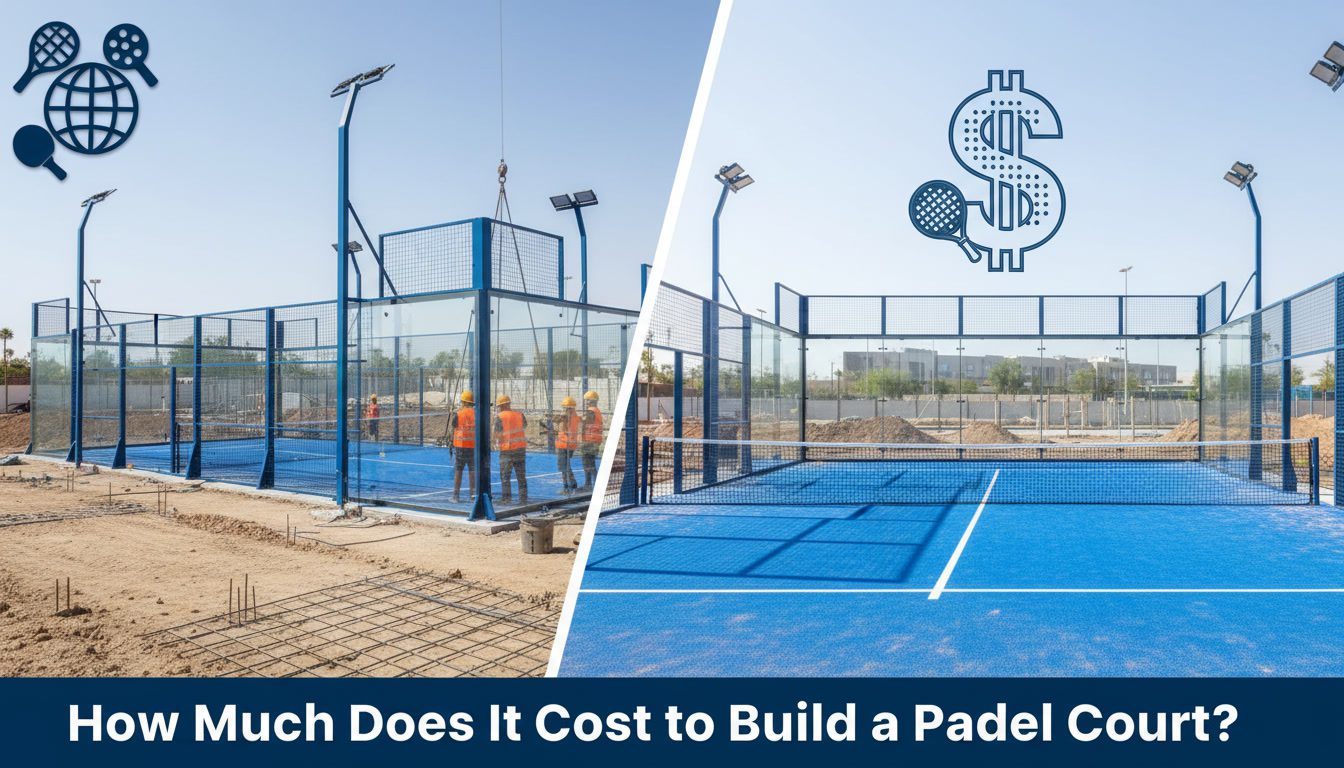
If you’re wondering how much it costs to build a padel court in 2026, the short answer is that most projects fall between $20,000 and $100,000+. A basic outdoor court typically costs $20,000–$35,000, while a mid-range commercial installation typically costs $35,000–$70,000. Premium facilities with advanced features can cost more than $100,000.
The final cost of constructing a padel court depends on factors such as site preparation, the quality of the artificial turf, the type of concrete foundation, local labor costs, and whether you choose an indoor or outdoor setup. Understanding these cost drivers early helps create a realistic budget and prevents expensive surprises later. In this guide, you’ll discover exactly where your money goes and what influences the total investment.
Padel Court Cost at a Glance
The truth is simple. The cost of a padel court is never fixed. It moves based on quality choices and location conditions. Builders usually give a wide range because every site behaves differently.
For example, soil strength alone can change the entire construction estimate. Some land needs extra leveling, while others need full reinforcement before construction even begins.
Average cost range (low, mid, high-end builds)
A basic setup usually starts near $20,000. Mid-range commercial courts often sit between $35,000 and $70,000. Premium indoor facilities can exceed $100,000, depending on finish quality.
What pushes the price up is not just design. It is the quality of steel structure, glass walls, and artificial turf used across the court.
Indoor vs outdoor cost comparison snapshot
An indoor padel court is always more expensive because it becomes a full building project. It requires roofing, ventilation, and controlled environments for year-round play.
An outdoor padel court is simpler in construction, but it must withstand rain, heat, and wind using strong, weather-resistant materials.
| Type | Real Cost Feel | Main Reason |
|---|---|---|
| Outdoor Court | Lower setup cost | Simple structure |
| Indoor Court | Higher investment | Building + systems |
Cost Breakdown: How Much to Build a Padel Court
Most people only see the finished court. But the money is spent long before that moment. A proper cost breakdown shows how each layer adds value and controls risk.
Think of it like building a mini stadium. Every part supports performance, safety, and long-term durability.
1. Land preparation and foundation
Before anything rises, the land must be ready. This step is called site preparation, and it often surprises first-time investors.
A strong base is usually built on a concrete foundation because it remains stable for years. Some cheaper projects use an asphalt subfloor, but that choice can affect long-term strength.
Drainage also plays a silent but critical role. Without a proper drainage system, even a premium court can degrade quickly after heavy rain.
2. Court structure (panels, frame, fencing)
The court’s skeleton is the steel structure. It holds everything in place, including fencing and panels.
On top of that structure sit the glass walls, which are not just for visibility. They also influence bounce, safety, and player experience.
If low-quality steel is used, maintenance problems start early. That is why experienced builders never compromise here.
3. Flooring and turf
The playing surface is where quality becomes visible instantly. A proper artificial turf system changes how the ball reacts and how players move.
Good turf lasts longer and reduces court maintenance costs. Cheap turf, on the other hand, breaks down quickly and forces early turf replacement.
This is one area where saving money up front often becomes expensive later.
4. Lighting and electrical
Modern courts rely heavily on LED sports lighting. Without it, evening games lose quality, and visibility drops fast.
Lighting also affects business income. Poor lighting means fewer bookings and weaker customer experience, especially in a sports facility that depends on night play.
5. Installation and labor
Even good materials fail if the installation is poor. Skilled labor costs may feel high, but they protect the entire investment.
Experienced teams understand alignment, safety spacing, and proper sealing. That reduces long-term repair risks significantly.
Indoor vs Outdoor Padel Court: Cost Differences
The biggest cost gap comes from choosing between indoor and outdoor. Both have strong advantages, but their budgets behave very differently.
An indoor padel court becomes a controlled environment. That means better player comfort, but also higher setup complexity.
Why indoor courts cost more
Indoor projects require more than sports construction. They require building engineering.
You are not just installing a court. You are building a structure with climate control, roofing, and sometimes ventilation systems.
This turns the project into a full commercial asset instead of a simple court installation.
Climate and location-based cost factors
Location changes everything. Hot regions need cooling considerations, while rainy regions need stronger sealing systems.
That is why builders often recommend a feasibility study before committing. It helps predict cost surprises based on weather and soil conditions.
Key Factors That Affect Padel Court Construction Cost
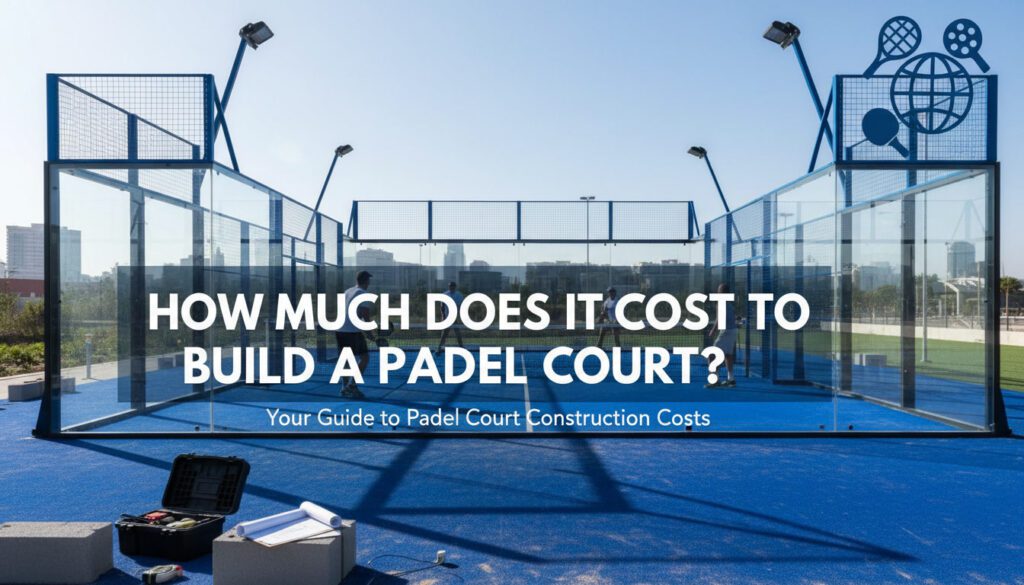
No two courts cost the same. Even identical designs can change in price due to location and material choices.
Understanding these variables helps investors avoid wrong expectations.
1. Court surface and turf quality
Better turf improves play quality and reduces the need for future repairs. That directly affects padel court pricing over time.
2. Foundation type
A concrete foundation offers long life and stability. An asphalt subfloor is cheaper but less durable in heavy-use environments.
3. Number of courts being built
One court is expensive per unit. Multiple courts reduce cost per structure because infrastructure is shared.
4. Brand and equipment quality
High-end suppliers provide stronger steel structures and better glass wall systems. Cheaper brands reduce upfront cost but increase repair risk.
How the Padel Court Building Process Works
Every court goes through a structured journey. It starts with planning and ends with final inspection.
1. Site evaluation and planning
Experts check soil, space, and layout. Even court dimensions matter here because spacing affects safety and play flow.
2. Getting cost estimates and quotes
This is where investors compare offers. A smart project budget is built only after multiple contractor reviews.
Construction timeline
Most courts take a few weeks to build. Weather and material availability can extend the timeline.
3. Final inspection and handover
Before opening, safety checks confirm lighting, flooring, and structure are fully ready for play.
Hidden and Additional Costs People Forget
Many investors underestimate hidden costs. These often appear after construction starts.
Permits and approvals are one example. Without proper permits and approvals, projects can face delays.
Maintenance is another major factor. Long-term operating expenses include cleaning, repairs, and upgrades.
Insurance is also required to protect the investment from damage or liability risks.
How to Reduce Padel Court Construction Costs Without Cutting Quality
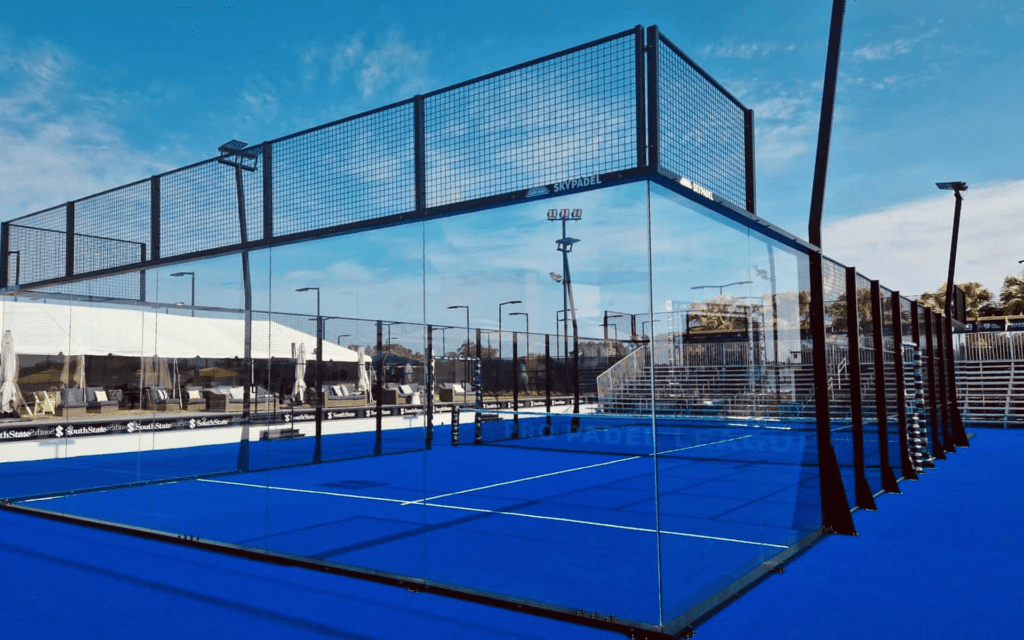
Cost reduction is not about cheap materials. It is about smart decisions.
Choosing the right supplier, building multiple courts, and planning during the right season all reduce costs without harming quality.
Strong planning protects both investment and long-term return on investment (ROI).
Common Mistakes That Increase Padel Court Costs
Most cost overruns happen due to poor planning. Skipping soil checks or choosing weak materials leads to higher repair costs later.
Another common mistake is ignoring court maintenance planning from the beginning. That creates long-term financial pressure.
Is Building a Padel Court Worth the Investment? (ROI for Owners)
A padel court is no longer just a sports space. It is becoming a strong sports venue investment opportunity.
Income comes from memberships, bookings, coaching, and tournaments. A busy facility can generate steady court rental income every month.
In many cases, investors recover their costs within a few years, depending on location and demand.
The Top 10 Best Padel Courts in the World
While understanding the cost to build a padel court is important, it is equally valuable to see what exceptional courts look like in practice. From stunning seaside venues to world-class tournament facilities, the Top 10 Best Padel Courts in the World showcase innovative designs, premium materials, and outstanding player experiences.
If you are looking for inspiration before starting your own project, Racketivity highlights some of the most impressive padel destinations across the globe, offering ideas for court layouts, amenities, and features that help create a memorable playing environment.
FAQs
How much does a basic padel court cost?
A basic setup usually starts around $20,000, depending on materials and location.
Is it cheaper to build indoors or outdoors?
Outdoor courts cost less, but indoor courts generate more stable income.
Can I build a padel court at home?
Yes, but you need enough space, budget, and legal approval.
How long does construction take?
Most courts are completed within 4 to 12 weeks.
Conclusion
The total cost of padel court construction depends on factors such as location, materials, court type, and installation requirements. While costs can vary significantly, careful planning, quality materials, and realistic budgeting help ensure a successful project. Whether you choose an indoor padel court or an outdoor padel court, a well-built facility can provide lasting value and a strong return on investment (ROI) as demand for padel continues to grow.




2 Comments on “How Much Does It Cost to Build a Padel Court? (2026 Pricing Guide)”