
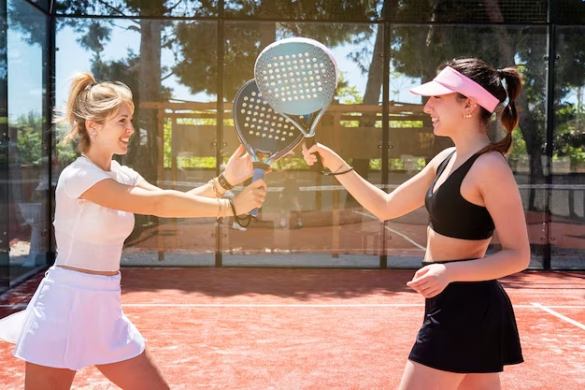
If you’ve been paying attention to the global sports landscape over the last five years, you’ve noticed a shift. The distinct thwack of a perforated racket hitting a tennis-like ball against a glass wall isn’t just a sound you hear in Spain or Argentina anymore. Padel is here, and it is absolutely massive.
But while the sport has enjoyed explosive, almost viral growth across Europe and Latin America, one massive frontier has remained relatively quiet. Asia is waking up to the padel phenomenon, and thanks to a massive new power move, the women’s game is about to get a turbo-charged injection of professionalism.
In a move that feels less like a corporate handshake and more like a declaration of intent, the WPA (Women’s Padel Association) and the IPPA (International Padel Players Association) have officially joined forces. Announced in early February 2026, this strategic partnership is poised to fast-track the development of women’s padel across Asia.
This isn’t just about setting up a few nets and selling some energy drinks. This is a coordinated, high-level effort to build infrastructure for female athletes in a region hungry for new sporting heroes. Here is everything you need to know about the deal, the key players, and why the WPA is suddenly the acronym on everyone’s lips.
The WPA and IPPA: Anatomy of a Power Play
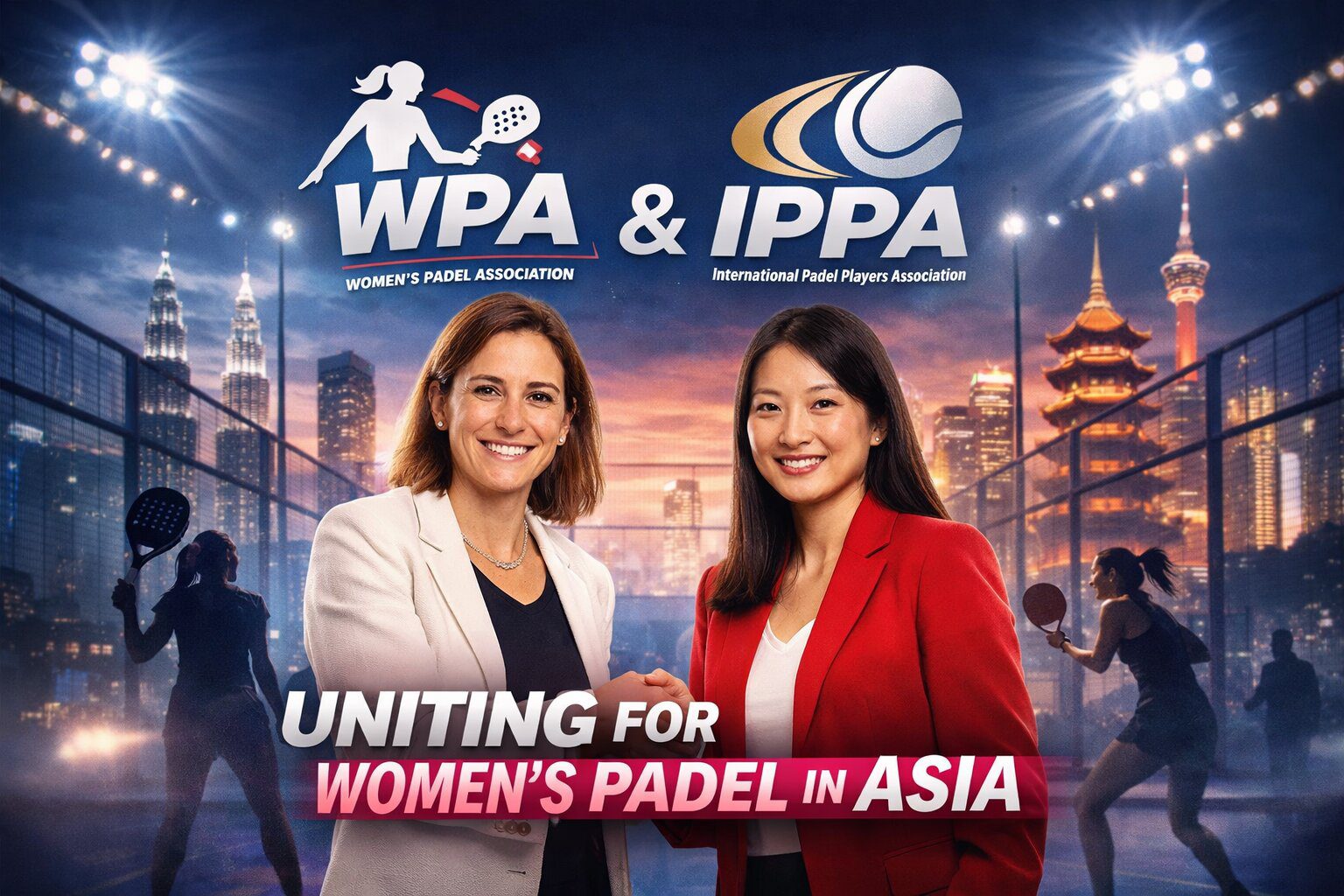
Let’s break down the “who” before we get into the “how.” The IPPA has long been the gold standard for player representation globally. They are the ones fighting for better conditions, standardized rankings, and the general professionalization of the tour.
On the other side of the net, you have the WPA. By positioning itself as the IPPA’s Official Anchor Partner in Asia, the WPA has effectively become the ground game for the sport in the region. Think of the IPPA as the architect and the WPA as the general contractor, ensuring the building actually gets built to code.
The deal, signed and sealed in early 2026, focuses on a collaboration with Asia Padel Events. This is crucial because it bridges the gap between governance and actual competition. You can have all the associations you want, but without tournaments, you don’t have a sport. You have a hobby.
The timeline here is interesting. Throughout 2025, the IPPA quietly expanded its membership base and refreshed its board, likely preparing for a move exactly like this. Now that the ink is dry, 2026 is shaping up to be the “Year of Execution,” with joint initiatives rolling out immediately.
Why Asia? Why Now?
To understand the magnitude of this WPA deal, you have to look at the market context. Padel critics used to argue that the sport was a niche European phenomenon. They said it wouldn’t translate to markets without a strong tennis culture. They were wrong.
Asia is the largest potential growth market for racket sports worldwide. We’ve seen how badminton and table tennis dominate the region. Tennis has had its massive moments (thanks, Li Na and Naomi Osaka). Padel fits right into that ecosystem. It’s fast, it’s social, and it’s incredibly TV-friendly.
However, infrastructure for women has lagged. While men’s clubs have popped up in hubs like Dubai and parts of Japan, women’s participation has faced hurdles—fewer coaches, fewer dedicated leagues, and a lack of clear pathways to going pro.
That is exactly the gap the WPA is looking to close. By focusing specifically on women’s padel, they aren’t just riding the wave; they are trying to steer the ship. Analysts are already comparing this moment to the European explosion of the sport a decade ago. If the WPA can replicate even a fraction of that success in countries like China, Japan, and the UAE, we are talking about millions of new players.
The Playbook: Four Pillars of Growth
It’s easy to issue a press release full of buzzwords about “synergy” and “growth.” It’s much harder to actually grow a sport. Fortunately, the WPA and IPPA haven’t just announced a partnership; they’ve released a blueprint. The strategy relies on four pillars, each essential for the ecosystem to survive.
1. Expanding Membership
You can’t have a professional tour without a base. The first order of business is getting players signed up, recognized, and into the system. This legitimizes the athlete base and gives the WPA the numbers they need to court big sponsors.
2. Athlete Development
This is the “secret sauce.” You don’t get world-class athletes by accident. You build them. The partnership aims to launch programs that take talented amateurs—or converts from tennis and squash—and turn them into padel specialists.
3. Coaching and Training
This might be the most boring pillar to read about, but it’s the most important. If you walk onto a court in Tokyo or Shanghai, you need a coach who knows the difference between a tennis serve and a padel bandeja. Establishing a certification standard for coaches ensures the game is played (and taught) the right way.
4. Visibility Through Events
This is where the fans come in. Collaborating with Asia Padel Events means we will see tournaments. Real ones. With prize money, broadcast cameras, and packed stands. Visibility is the currency of modern sports, and the WPA knows they need to put a product on the screen that looks professional.
The Human Element: Lucía Sainz and the Leadership
It is impossible to talk about the credibility of this move without mentioning the people involved. Lucía Sainz, a titan in the IPPA, has been instrumental in guiding this vision. When you have a figure of her stature involved, it signals to the rest of the padel world that this isn’t a drill.
Sainz and the IPPA leadership understand that you can’t just copy and paste the European model into Asia. The WPA leadership will oversee regional execution, ensuring that cultural nuances are respected and that the programs meet local needs. It’s a smart “glocal” approach—global standards, local hustle.
Fans and players have already taken to social media to voice their support. The overwhelming sentiment? It’s about time. For years, female players in Asia have had to look toward Spain or Argentina if they wanted to take the sport seriously. This partnership promises to bring the mountain to Muhammad.
The Big Picture: Olympic Dreams and Commercial Gold
Let’s zoom out for a second. Why are brands like Adidas, Babolat, and Bullpadel pouring money into equipment and sponsorships in Asia? Because they smell opportunity. The commercial potential for the WPA in this region is staggering. If padel takes off in Asia the way it has in Sweden or Italy, equipment sales alone would be a billion-dollar industry. By organizing the women’s game, the WPA provides a safe, structured environment for these brands to invest.
But there is a bigger prize on the horizon: The Olympics. The IPPA has made no secret of its desire to see padel played under the five rings. For that to happen, the sport needs to show that it is truly global. It can’t just be a sport for Europe and South America. A thriving, competitive women’s tour in Asia is practically a prerequisite for Olympic inclusion. In this light, the WPA partnership isn’t just about regional growth; it’s a lobby for the future of the sport on the world’s biggest stage.
What Fans Can Expect Next
So, what does this actually look like for the average sports fan? Expect 2026 to be a busy year. We are likely to see a flurry of announcements regarding new tournament dates and locations. Keep an eye on major urban centers—Dubai, Singapore, Tokyo. These are the likely landing spots for the first wave of WPA-backed events.
We should also expect to see a new crop of stars emerging. Just as tennis saw the rise of Asian superstars who changed the sport’s global landscape, padel is ripe for new icons. The WPA is essentially building the stage for these future stars to walk out on. For the casual player, this means more courts, better access to coaching, and a community that feels connected to the sport’s global pulse.
The partnership between the WPA and the IPPA is the kind of boring administrative news that actually changes history. It’s the infrastructure work that happens quietly before the explosion of noise. By professionalizing the women’s game in Asia, these two organizations are lighting a fuse. It might take a year, maybe two, but sooner or later, the boom is coming. For the athletes waiting for their shot, and the fans waiting for the show, it can’t start soon enough.
Discover More About Padel or Connect With Our Team
New to padel or looking to sharpen your knowledge of the sport? Explore our in-depth padel guide at Racketivity, covering the rules, equipment, court layout, and practical tips to help you play with confidence. If you are curious about our story, our mission, or how we contribute to padel’s growth, visit our About Us page or reach out via our contact section. Our team is always ready to assist, answer your questions, and welcome you into the padel community.



One Comment on “WPA and IPPA About to Ignite a Women’s Padel Revolution in Asia”