
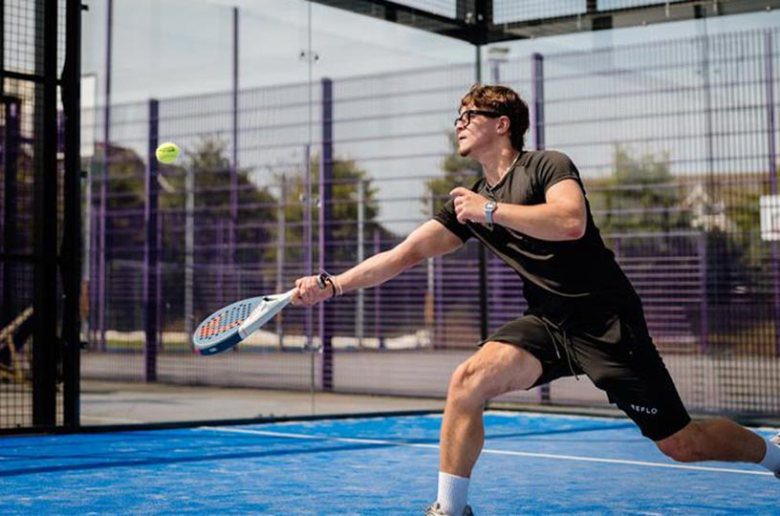
If you haven’t heard the specific thwack of a perforated racket hitting a ball off a glass wall recently, you probably haven’t been paying attention. Padel isn’t just “coming soon” anymore. It’s here, it’s loud, and it is absolutely massive.
We are watching a shift in the global sports pecking order. What started as a niche activity in Mexico back in the 60s and became a national obsession in Spain has officially gone global. But we aren’t just talking about a few courts popping up in public parks. We are talking about an infrastructure boom that rivals the golden age of tennis.
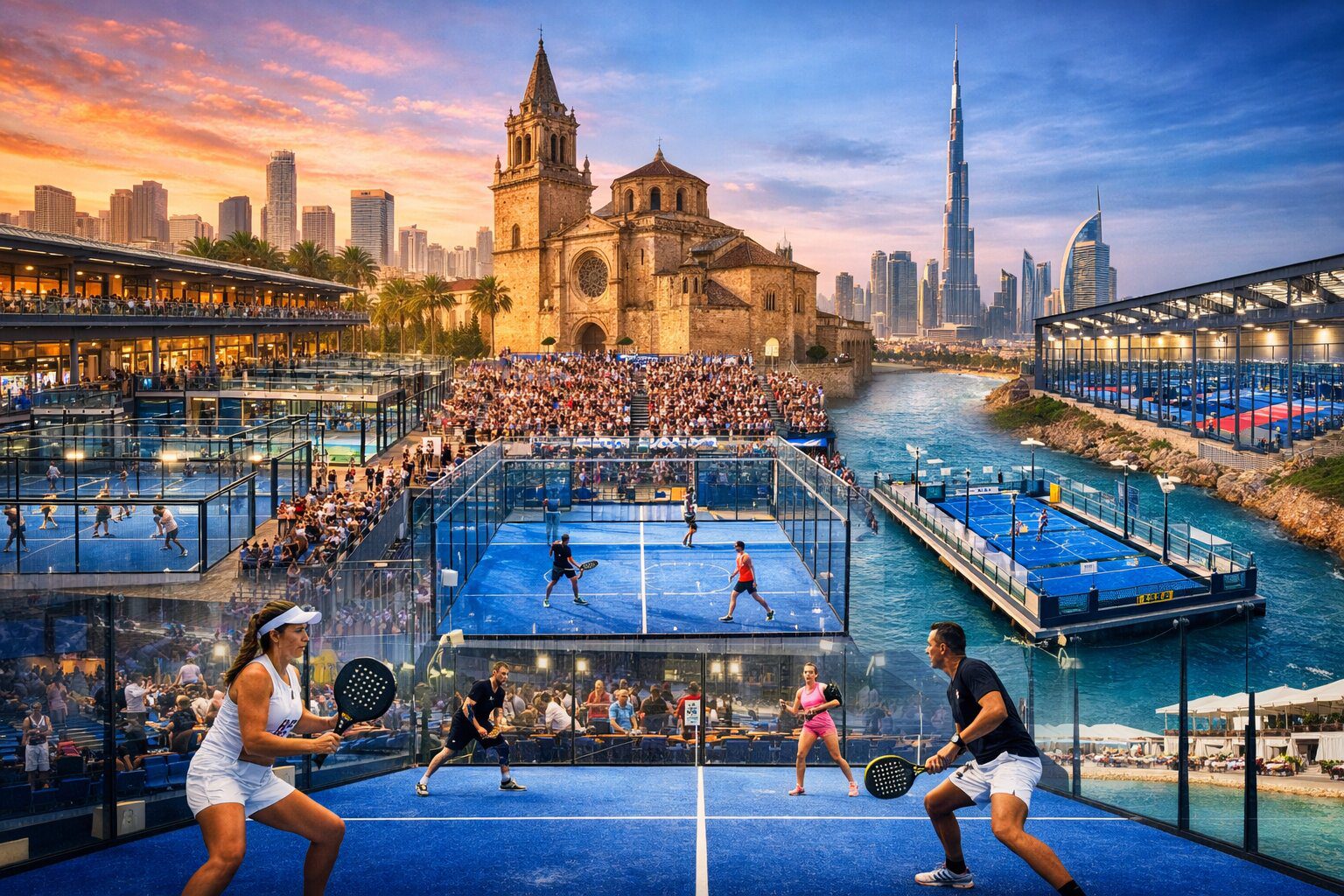
On one side, you have the industrial-scale growth: mega-clubs that look more like small cities than sports centers. On the other side, you have the “wow” factor: courts appearing in historic town squares, on floating barges, and inside luxury resorts. Here is a look at the heavy hitters and the hidden gems defining the current state of padel.
The Cathedrals of Padel: Where Size Matters
When we talk about the growth of this sport, we have to start in Spain. To understand the sheer scale of padel mania, you have to look at El Estudiante in Alcobendas, Madrid.
El Estudiante isn’t just a club; it’s practically a pilgrimage site. We are talking about 40 courts. Let that sink in. Forty distinct battlegrounds in one facility. It’s the world’s largest padel club, but it feels more like a dedicated Olympic village. Beyond the glass walls, they’ve packed in tennis courts, golf facilities, and restaurants. It is the blueprint for what a “super-club” looks like—a place where you don’t just go to play a set; you go to live the lifestyle for the day.
But the obsession isn’t locked to the Mediterranean climate. Head north to Finland, and you’ll find Padel House Espoo. The Scandinavians have embraced the sport with a ferocity that matches the Spanish, but they’ve had to adapt to the cold. The result is an architectural marvel featuring 33 indoor panoramic courts. It serves as a massive Scandinavian hub, proving that the weather is no longer a barrier to entry for this sport.
Back in the Spanish heartland of Valencia, the Family Sport Center is giving El Estudiante a run for its money. As of 2024, they’ve expanded to 32 indoor courts. It is currently one of the largest indoor facilities on the planet.
Just down the road, Sportcity in Valencia boasts 30 courts of its own. What’s fascinating here is the evolution—Sportcity started as a football center. The fact that they pivoted to become a massive padel complex tells you everything you need to know about where the money (and the interest) is flowing in European sports.
The Global Padel Takeover
The virus has spread beyond the traditional strongholds. In Sweden, PDL Center Frihamnen in Stockholm has turned a converted industrial space into a 28-court haven. It’s gritty, it’s cool, and it perfectly captures that urban aesthetic that makes padel feel younger and edgier than country-club tennis.
Across the Atlantic, the United States is finally catching up. For a long time, the U.S. was the sleeping giant of the padel world, obsessed with Pickleball while the rest of the world looked at glass walls. That’s changing. Ultra Padel Club in Miami is leading the charge with 26 courts, making it the largest in the United States.
Miami is the perfect landing spot for the sport—it has the Latin American connection, the weather, and the social scene. Ultra isn’t just about the game; they are integrating tech into digital booking and training apps to modernize the user experience.
South America remains a powerhouse as well. Ciudad Deportiva USS in Chile features 25 courts, along with swimming and football facilities, keeping the roots of the sport alive and well in the Americas.
The “Bucket List” Courts: Padel as a Spectacle
While the mega-clubs are driving the participation numbers, the “stunt” courts are driving the culture. This is the stuff that lights up social media and makes people stop scrolling. The sport has a unique ability to fit into spaces where tennis simply can’t. Because the court is smaller (roughly 25% smaller than a tennis court) and enclosed, you can drop a padel court almost anywhere.
Take the Plaza de Santa Maria in Spain. The World Padel Tour set up a court right there in the historic square. Imagine playing a tie-break surrounded by centuries-old architecture. It’s a visual clash of history and modern sport that looks incredible.
Then there is the sheer luxury angle. In Greece, the Lytos Beach Academy has built a court at a seaside resort that offers breathtaking views of the Mediterranean. It’s the kind of place where it’s hard to keep your eye on the ball because the backdrop is so distracting. Similarly, Cassone in Italy offers panoramic lake views that turn a sweaty match into a zen experience.
We are also seeing a rise in “design-forward” courts. Italy, known for its flair, has introduced colorful indoor courts in vibrant shades—breaking away from the traditional blue turf. In Tenerife, the Maritrim Hotel features a Pink Court that has become an instant icon.
Why This Boom Matters
You might be asking, “Why does this matter if I don’t play?” It matters because it represents a shift in how we consume sports. Padel is positioning itself in a sweet spot. It’s easier to learn than tennis—you can have a fun rally on your first day. It’s more dynamic and athletic than pickleball. It’s highly social.
The rise of these venues proves that investors are betting big on this being a permanent fixture, not a fad. When you see infrastructure investment like El Estudiante or Ultra Padel Club, that isn’t “pop-up” money. That is “we are here to stay” money.
How Padel Is Evolving Worldwide
Dubai and Abu Dhabi are redefining the global padel scene with world-class tournaments and elite facilities, while newcomers can explore the sport through our comprehensive 2026 beginner’s guide covering rules, courts, and equipment.
At the same time, organizations like WPA and IPPA are driving a women’s padel revolution in Asia, creating new opportunities, expanding tournaments, and increasing visibility for female players across the region. Together, these developments are shaping the future of padel on every level.
What Comes Next for the Sport?
So, where do we go from here? Expect the line between “sport” and “hospitality” to blur even further. The future of padel isn’t just gyms; it’s hybrid venues. We are going to see more clubs that combine high-end dining, co-working spaces, and wellness facilities with the courts. The Argentario Golf Resort Spa in Italy is already doing this, integrating padel into a luxury golf environment.
We will also see the “pop-up” concept expand. Temporary courts in urban centers—like the one in Philadelphia—will serve as a recruiting tool, bringing the game to people who might not drive out to the suburbs to find a mega-club.
The World Padel Tour is continuing to expand its calendar, and where the pros go, the amateurs follow. Spain was the incubator. Europe was the testing ground. Now, with the U.S. and Asia coming online, padel is ready for its close-up in prime time. Whether you are looking for a 40-court mega-complex or a single pink court by the ocean, one thing is clear: the glass walls are going up everywhere. You might as well pick up a racket.
Learn About Padel and Connect With Our Team
Whether you’re just starting out or want to deepen your understanding of padel, our comprehensive guide has you covered—from rules and equipment to court layouts and expert tips to help you play confidently.
If you’d like to learn more about who we are, our mission, or how we support padel’s growth, visit our About Us page or get in touch via our contact section. Our team is always ready to answer your questions and welcome you into the vibrant padel community.



One Comment on “Inside the Massive Clubs and Wild Courts Fueling the Global Padel Obsession”