The global padel explosion has officially hit a retail bottleneck. There are thousands of enthusiastic newcomers actively sabotaging their own development by overspending on elite-level gear. As clubs pop up from London to Los Angeles, a clear trend has emerged in pro shops and online marketplaces.
Beginners are bypassing entry-level equipment and dropping serious cash on high-end carbon frames they lack the technique to handle. This surge in premium gear acquisition has created an ironic crisis on the court. Expensive and unforgiving rackets are causing a surge in unforced errors and widespread physical fatigue among recreational players.
The Purchasing Capacity
This purchasing frenzy matters because padel is inherently a game of attrition, positioning, and delicate touch rather than raw, unadulterated power. When an inexperienced player steps into a glass cage, the sport’s steep learning curve becomes an absolute cliff.
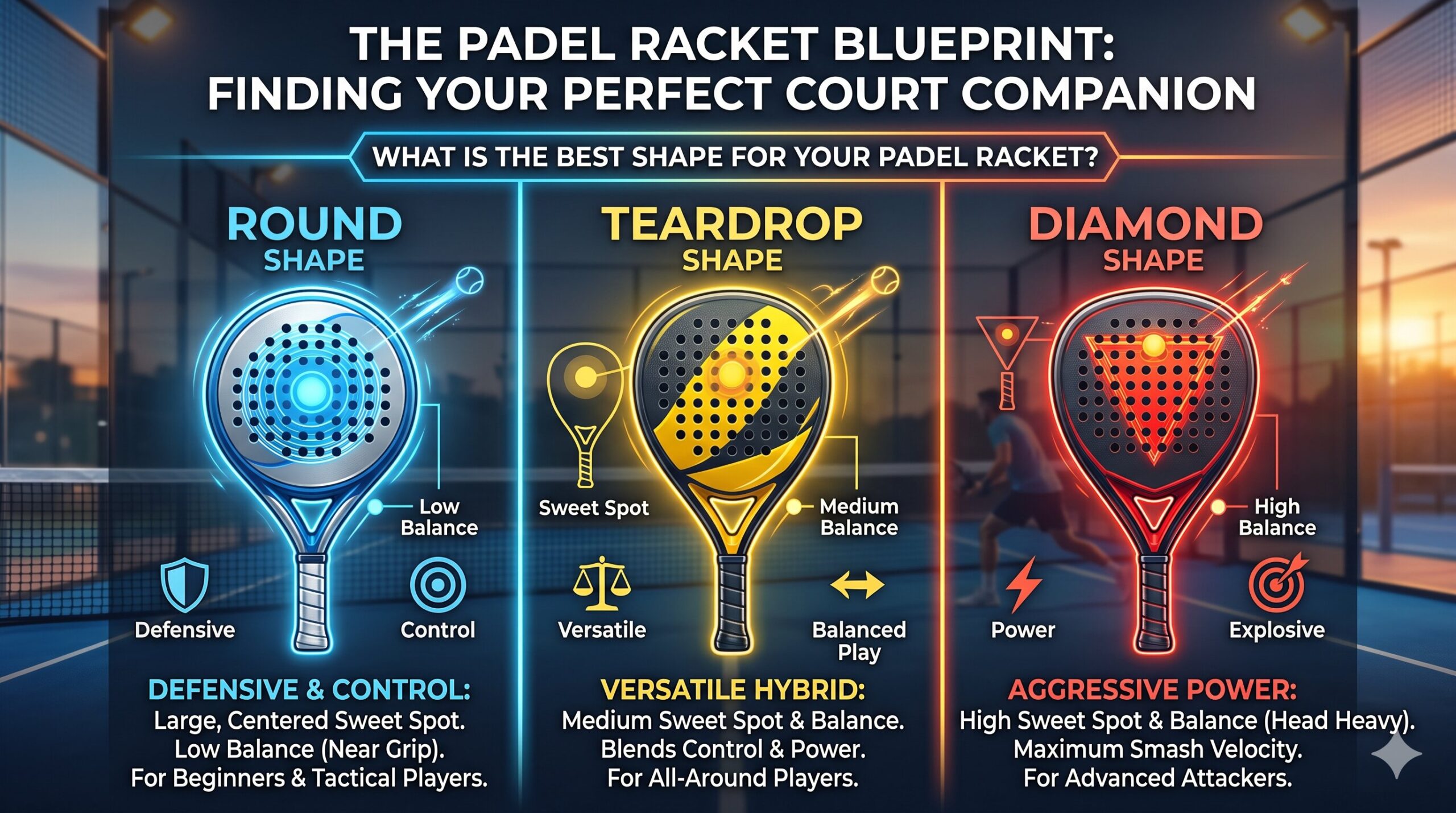
He would be wielding a stiff, head-heavy racket designed for a world-tour professional. Instead of building confidence by sustaining long, controlled rallies, players find themselves fighting a tiny sweet spot and a rigid frame that punishes every off-center strike.
The psychological fallout is immediate. The frustration mounts, and bad habits harden into permanent muscle memory. Moreover, the physical strain frequently leads to debilitating cases of tennis elbow before a player even learns how to properly read a ball bouncing off the back glass.
Decoding the Price Matrix: Industry Experts Weigh In
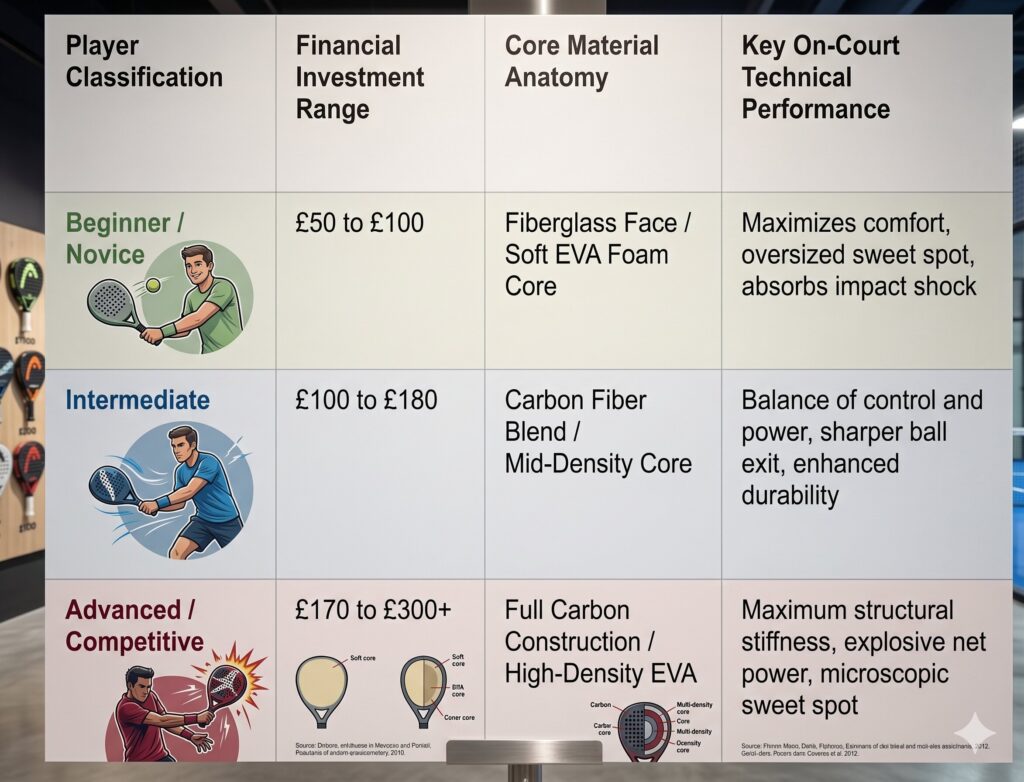
According to market breakdowns, the financial sweet spot for a padel purchase is directly tied to a player’s current physical mastery of the game. It has nothing to do with their long-term athletic ambitions. The aggregated data from these leading industry specialists reveals that retail prices currently scale from £45 to well over £300.
It is driven primarily by raw material composition, core foam density, and structural weight distribution. The consensus across the sport’s most trusted diagnostic sources is definitive.
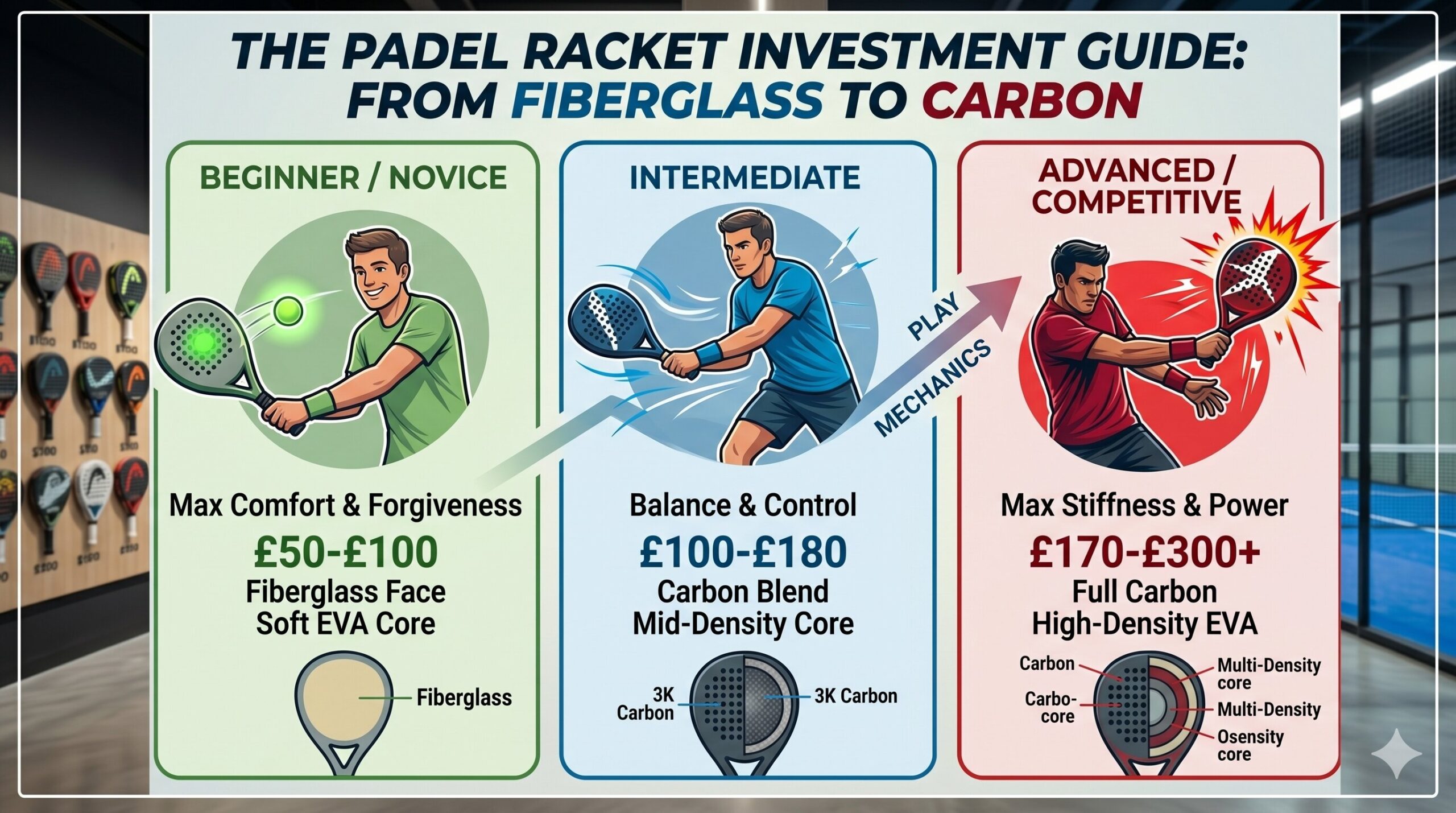
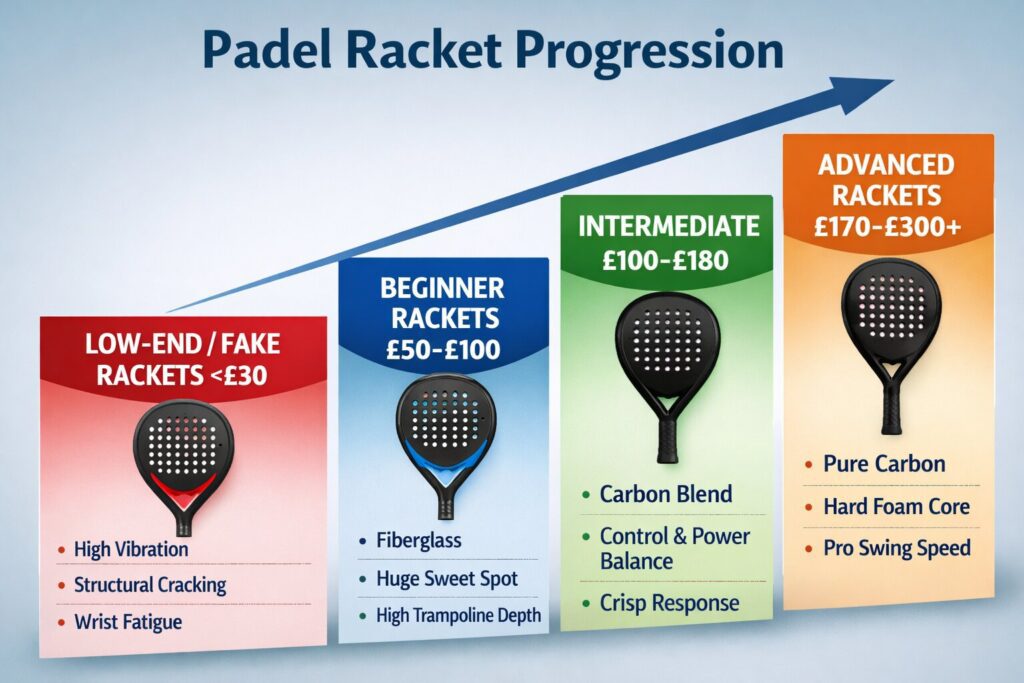
Spending more money does not yield a more effective piece of equipment. It yields a highly specialized tool that actively harms the performance of anyone who has not spent years refining their swing mechanics. To prevent consumer exploitation and save players from self-inflicted technical stagnation, the major coaching academies and retail evaluators have formalized the market into three clear, level-appropriate pricing tiers.
How Much Should You Spend On A Padel Racket
The Ego Trap Warning: A rigid, high-density carbon racket will not give a beginner more power. Because carbon requires high swing speed and clean contact to activate its elasticity, a slower, unrefined swing will result in a dead, short ball that barely reaches the net.
The Mechanical Reality Behind Every Price Point
The underlying engineering explaining why cheap rackets fail and expensive ones punish beginners comes down to a fundamental clash between fiberglass and carbon fiber. In the entry-level bracket, which retail watchdogs place strictly between £50 and £100, manufacturers construct frames utilizing flexible fiberglass surfaces paired with ultra-soft, low-density EVA foam cores.
For a beginner, this combination becomes a mechanical cushion. When a ball impacts a fiberglass racket, the material flexes deeply. This creates a “trampoline effect”. In simple terms, it means naturally pushing the ball deep into the opponent’s court with minimal physical exertion.
Say No to Generic Rackets
Conversely, trying to cut corners by investing under £30 in generic online rackets introduces structural complexities. Industry teardowns indicate these ultra-budget options use brittle plastics that crack under normal ball impacts and lack internal vibration-dampening tech, sending harsh shockwaves directly up the arm into the elbow joint.
Once a player graduates to the intermediate tier, typically defined by playing multiple times a week and intentionally dictating point depth, the recommended investment climbs into the £100 to £180 range. At this price point, manufacturers phase out heavy fiberglass in favor of lightweight carbon fiber weaves.
They usually use 3K or 6K carbon specifications. Eventually, the players experience a responsive feel, enabling them to experiment with spin, aerial smashes, and drop shots. The sweet spot doesn’t become a major issue. It allows padel players to transition from defensive grind to net play.
Frequently Asked Questions (FAQs)
1. Why are beginners discouraged from buying elite rackets at the start?
Ans: The elite rackets are designed for padel professionals, who have a built-in technique and great hand-eye coordination. These rackets don’t have a big sweet spot. If a beginner chooses a racket with a small sweet spot, they will have more mistimed shots and eventually get discouraged. The high unforced error count is the last thing a beginner needs.
2. How can buying the wrong rackets result in injuries like tennis elbow?
Ans: An elite racket offers less built-in shock absorption. On the other hand, expensive rackets contain brittle plastics and lack vibration-damping technology. In both of these cases, the impact goes to the player’s arm and the elbow joint, resulting in tennis elbow.
3. What do you mean by “trampoline effect”, and why should beginners note it?
Ans: The trampoline effect is the mechanical cushion created after the combination of a flexible fiberglass surface alongside a soft, low-density EVA foam core. When the ball connects to the racket, it absorbs the mechanical force and ensures that the ball goes deep towards the opponent’s side without much effort.
4. Is “Ego Trap” a common mistake made by Padel pro shops?
Ans: The “Ego Trap” is a myth that pros fall into when buying their high-density carbon racket. They tend to believe that buying such a racket will automatically generate more power. However, you can only activate carbon’s elasticity when you execute high swings and are precise with your shots.
5. When should you consider upgrading your intermediate padel racket?
Ans: You can opt to upgrade your padel racket once you are playing consistently for weeks. Make sure you add £100 and £180 to your current racket to transition you to the lightweight carbon series.
Conclusion
A padel player always seeks perfection in his game. They tend to spend most of their game time with the coaches to improve their technique and build muscle memory for their shot selections.
However, most of the improvements are not just technical. Some improvements come with upgrading their armor. The best thing to do before upgrading or spending on your racket is to contact your coaches and ask for their recommendation.