
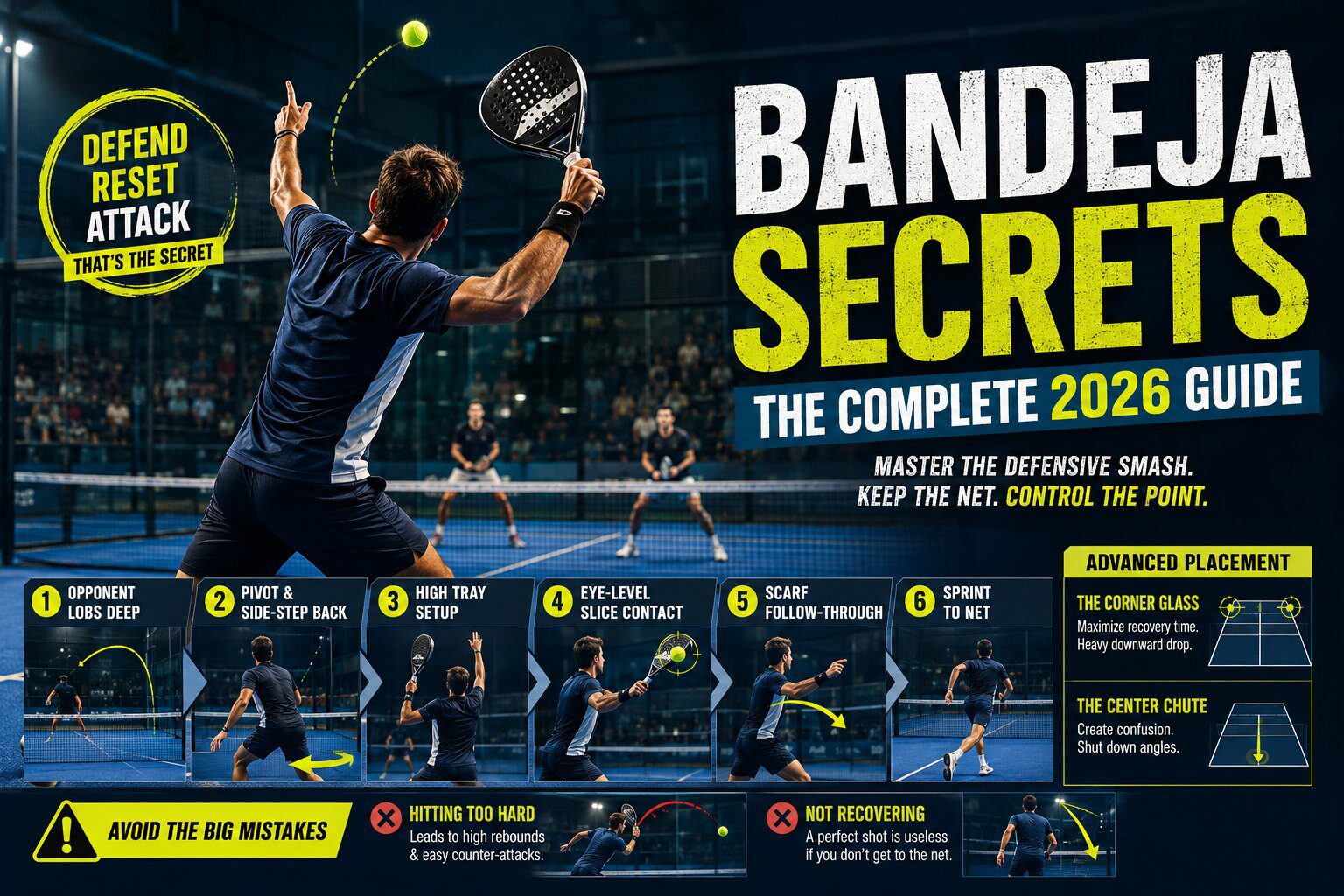
Leading padel training academies report that amateur players who fail to master the structural transition of the defensive smash consistently give away their net dominance. While the sport continues to expand, the gap between mid-level enthusiasts and upper-tier competitors remains rooted in how they execute the transition.
Mastering this dynamic matters because the mechanical transition dictates the entire tactical flow of a padel match. Unlike traditional tennis, where an overhead is viewed as an immediate, terminal weapon, the padel environment treats deep lobs as a structural challenge that requires a reset rather than a raw-power response.
If a backcourt player hits a standard tennis-style smash from a deep position, the ball carries too much rebound velocity off the back wall. This effectively delivers a simple, high-sitting counter-attack directly to the opposing side.
Decoding the Anatomy of a Pro-Level Transition Stroke
According to detailed technical guides, the secret to the modern shot lies in its identity as a “defensive smash”. Coaches point out that the primary objective of the stroke is to neutralize an opponent’s aggressive lob. They can limit the ball’s upward bounce off the glass and give the striking duo enough time to sprint forward. The absolute golden rule across all four training blueprints is clear: you are not trying to win the point outright; you are trying to keep from losing the net.
To appreciate why this shot requires such precise execution, players must look closely at how its mechanics differ from those of other court sports. When an opponent lifts a deep lob over your head, your instinct is to run backward and hit down on the ball. The professional academies warn that this very instinct destroys a player’s positioning. By breaking down the kinetic chain into repeatable phases, elite coaches have standardized a system that transforms an awkward backpedal into a fluid tactical defense.
The Secret Weapon
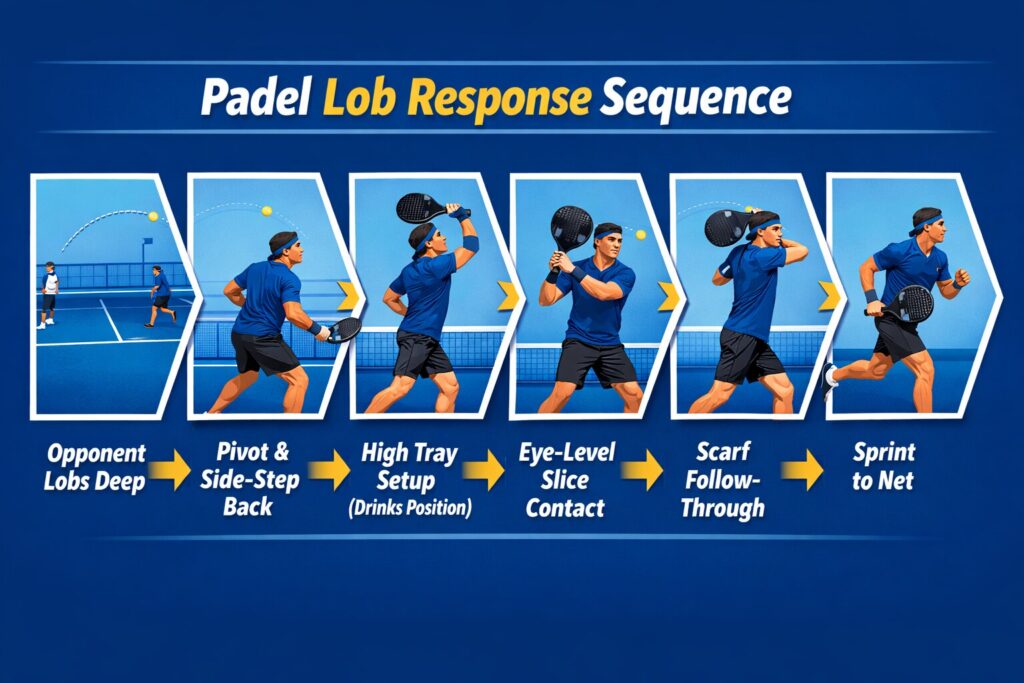
To execute the technical mechanics used by the world’s top players, athletes must completely reprogram their upper body preparation and footwork sequences. The process relies on an intentional chain of movements that eliminates the vertical bounce that aggressive opponents feed on.
- The Early Lateral Pivot: The moment the ball leaves the opponent’s racket and ascends into a lob, you must immediately turn your body sideways. Your feet must become completely perpendicular to the net. Running backward facing forward ruins your awareness.
- The “Tray” Racket: Raise your dominant elbow to shoulder height. Point the racket head towards the sky. Your non-dominant arm should point directly up at the incoming ball.
- The Eye-Level Strike: Don’t allow the ball to drop below shoulder height before contact. The optimal striking zone is right at eye level, slightly in front of your body. Striking the ball behind your head or too low to the ground eliminates your ability to cut the ball.
- The Scarf Finish: Slice across the lower hemisphere of the ball with a calculated, smooth motion. The follow-through should finish across your body.
Advanced Ball Placement
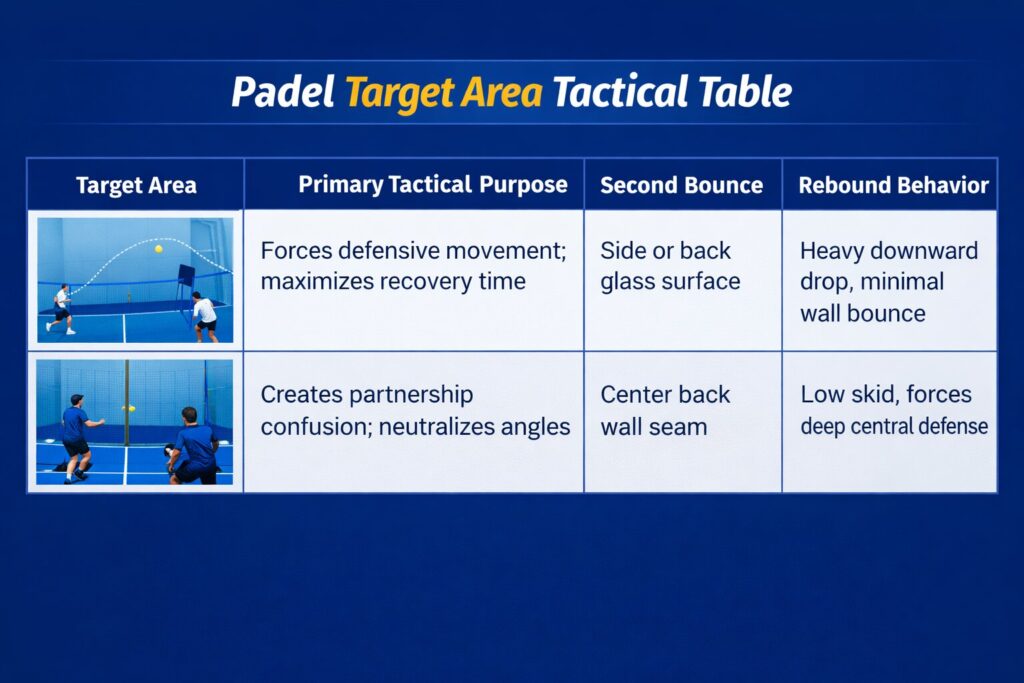
Once the mechanics are secure, tactical success depends on knowing where to send the ball to maximize recovery time. Professional matches show that a beautifully hit shot directed at the wrong section of the court can still leave a team vulnerable to quick counterattacks.
Mastering the Corner Windows
Aiming deep into the corners is the primary choice for professional players under pressure. When the ball is sliced accurately into the side or back glass, the combination of backspin and wall friction causes the ball to drop directly toward the turf.
This double-glass interaction dramatically slows the pace of the point. It keeps the opponents stuck deep in their own corners while you and your partner easily stride back into a dominant net position.
Slicing the Center Chute
The alternative target is the middle gap between your two opponents. Slicing the ball directly down the center line forces the second bounce to land near the junction of the back walls. This creates visual confusion between partners about who should claim the ball, pulls both defensive players out of position toward the center of the court, and shuts down their ability to look for an angled pass.
Avoiding the Catastrophic Blunders That Ruin Your Positioning
The path to integrating these adjustments requires a sharp awareness of common mistakes that plague developing players. The most common error is trying to hit the ball with maximum power.
When an athlete treats this transition shot like an aggressive tennis smash, the resulting flat impact causes the ball to ricochet hard off the back wall. It gives the defending team an easy opportunity to hit a passing shot or a counter-lob.
Another frequent problem is a lack of post-shot physical movement. Many amateur athletes look at their shot like spectators. The pro academies emphasize that a perfect hit is completely useless if you do not immediately use that window of time to charge forward.
The stroke is only halfway completed when the ball leaves your strings. The second half is the physical sprint required to close the gap and lock down the net line before your opponent can strike back.
Frequently Asked Questions (FAQs)
1. Why is it difficult to hit a tennis-like overhead smash in padel?
Ans: There is a slight difference between tennis and padel. In tennis, an overhead (smash) is almost always the last shot of the rally, especially when you are on the net. In padel, a forceful smash can result in the ball coming towards you at an even higher speed because of the deflection from the wall.
2. What is the priority of a defensive padel smash?
Ans: If you win the point, that’s a bonus. However, the utmost priority is to ensure that the people don’t come towards the opposing net. That can be done by adding a slice to the smash, keeping the ball low and difficult to deal with.
3. What are the key steps to execute the perfect defensive padel smash?
Ans: The first step is to turn sideways so that your feet are perpendicular to the net while the ball goes up. Raise your elbow with an open racket face so that you execute the Bandeja. Thirdly, make sure you maintain eye contact with the ball through the end of your follow-through.
4. What are the best areas to target with a defensive smash?
Ans: The best areas to target are the corners of the windows. Hitting the balls directly at them will cause heavy deflection. Slicing the ball towards the window corners will keep it low. Secondly, you can also hit towards the Center Chute, which is the middle part of your side of the wall.
5. What are the most common mistakes while executing the defensive smash?
Ans: The most obvious example is hitting the ball with too much power. Slightly bad timing means the ball is out of the court. If you are a tennis player, the biggest example you will see is that you no longer stay vigilant after hitting a smash, because your muscle memory tells you the point is over.
Conclusion
Regardless of whether you play tennis, padel, or any other racket sport, your utmost priority is to win the point and conserve energy. However, in the padel world, a smash doesn’t necessarily mean finishing off the point. It is just part of the grind that is essential in winning the point.
There are no one twos or aces as you see in tennis. Bandeja is also not an exception. However, it is important that you know the technicalities behind hitting this shot so that you are in the ascendancy during the rally.

One Comment on “Understanding the Bandeja Secrets in Padel (2026 Complete Guide)”